In the fast-paced life of 2026, finding a moment of silence is a luxury. Specifically, the Korean Tea Ceremony, or Dado, is a traditional practice designed to calm the mind and nourish the soul. While it may look like just drinking tea, it is actually a form of moving meditation.
However, for beginners, the many small cups and specific movements can feel like a complicated puzzle. Fortunately, I have Ssam to teach me that the goal is not perfection, but “Pyeon-an-ham” (comfort).
Welcome to Level 1. Let me tell you about the time I tried to treat a 1,000-year-old tea tradition like a shot of espresso at a busy airport.
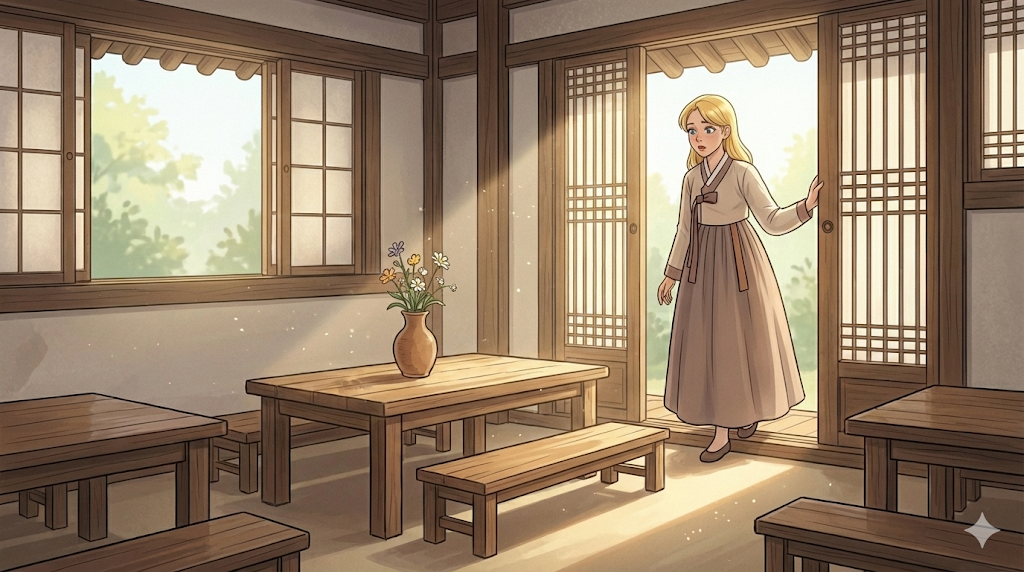
Level 1: The “Espresso” Mistake
Flashback: My first tea experience in Insa-dong.
Initially, I was so thirsty that I picked up the small teacup the moment it was filled. So, I gulped the whole thing down in one second. Unfortunately, I realized two things: the tea was boiling hot, and the tea master was looking at me with a very surprised expression.
Instead of a peaceful moment, I ended up with a burnt tongue and a red face. Eventually, Ssam leaned over and whispered, “Alice, tea is not for your throat; it’s for your eyes, your nose, and your heart.” For this reason, I learned that in the Korean Tea Ceremony Guide, speed is the enemy of flavor.
Level 2: The Solution (The Five Senses of Tea)
Immediately, Ssam showed me the “Three Sips” rule. “We drink with three sips to appreciate the journey of the tea,” he explained.
1. Warming the Heart (and the Cups)
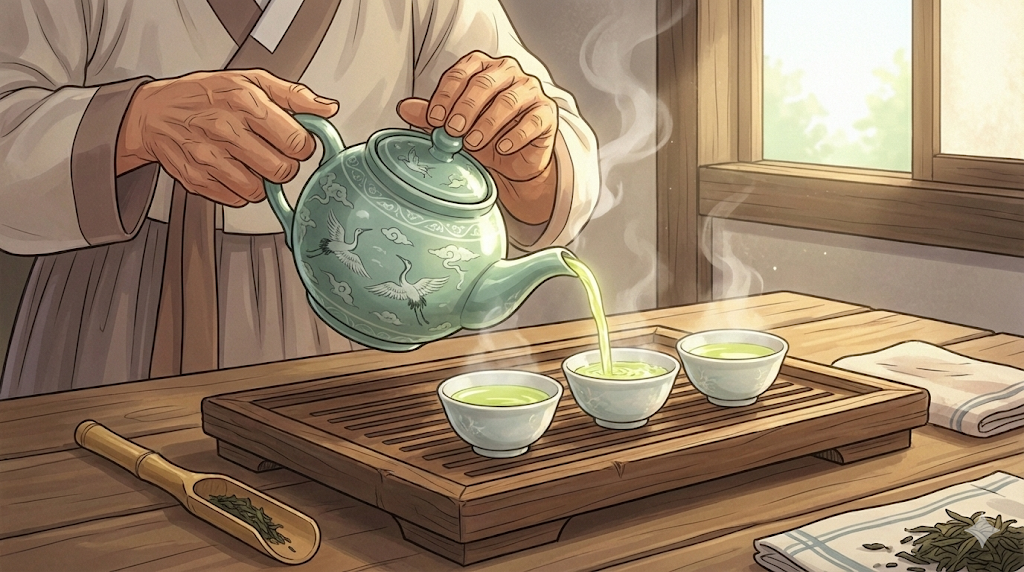
First, you must pour hot water into the teacup and the “Sook-woo” (cooling bowl) before adding the tea leaves.
- The Reason: This warms the vessels so the tea doesn’t get cold instantly. Indeed, the sound of the water pouring is the start of the meditation.
2. The Golden Ratio
Next, let the tea leaves steep for about 30 to 60 seconds.
- Action: Pour the tea into the cups, but do it in small increments, going back and forth between the cups.
- Why: This ensures that the strength and color of the tea are exactly the same for every guest.
Level 3: The Three-Sip Rule
(How to actually drink it)
Harmony of Senses
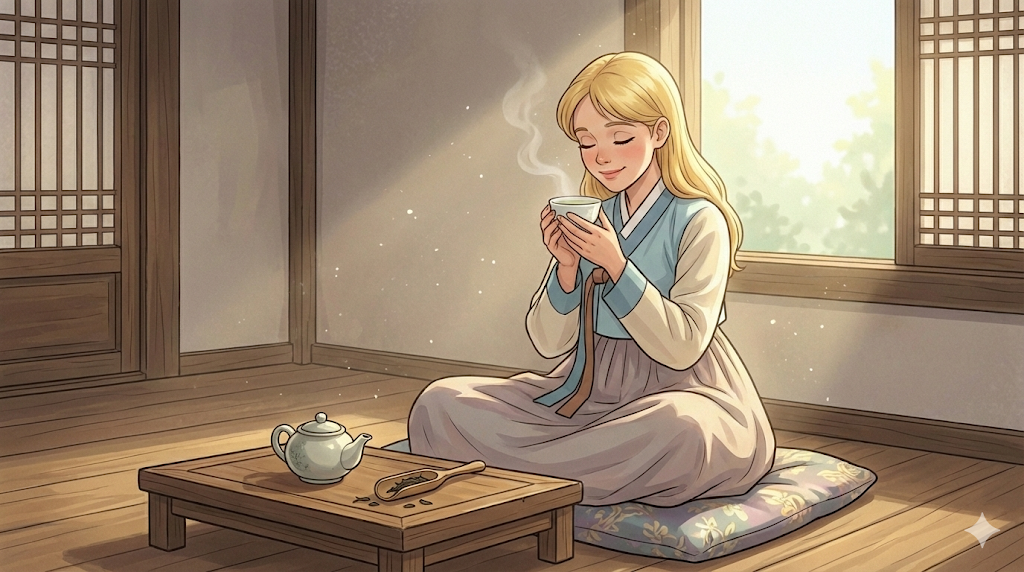
You might wonder, “Why can’t I just drink it all at once?” Specifically, the Korean Tea Ceremony Guide emphasizes three stages:
- First Sip: Observe the color and appreciate the clarity.
- Second Sip: Inhale the aroma and feel the earthiness.
- Third Sip: Taste the flavor on your tongue and feel it go down your throat.
Consequently, by the time you finish the third sip, your heart rate slows down, and your stress begins to melt away. Indeed, it is the ultimate “Reset Button” for your brain.
Level 4: Ssam’s Insight (The Philosophy of Dado)
In 2026, many Koreans are returning to Dado to fight “Digital Burnout.” Specifically, Ssam explains the four core spirits of tea:
- Hwa (Harmony): Being at one with nature and others.
- Gyeong (Respect): Honoring the tea, the guest, and the moment.
- Seong (Purity): Having a clean and honest heart.
- Jeok (Tranquility): Reaching a state of quiet stillness.
Alice’s Bottom Line: It’s Okay to be Clumsy
The most important takeaway for the Korean Tea Ceremony Guide is that the tea doesn’t care if you make a mistake. If you drop a leaf or hold the cup a bit awkwardly, it’s okay. Therefore, just focus on the warmth in your hands and the sound of the water. Indeed, the best cup of tea is the one that makes you feel “Pyeon-an” (at ease).
Survival Hangul: Tea Edition
- “차 맛이 아주 좋아요.”
- Pronunciation: (Cha mat-i a-ju jo-a-yo)
- Meaning: The tea tastes very good.
- “이거 무슨 차예요?”
- Pronunciation: (I-geo mu-seun cha-ye-yo?)
- Meaning: What kind of tea is this?
- “더 마셔도 될까요?”
- Pronunciation: (Deo ma-syeo-do dwael-kka-yo?)
- Meaning: May I have some more?
Read This Next (Recommended for You)
- Need a high-tech shopping fix after your meditation? [Unmanned Stores in Korea: A 24/7 Future Shopping Guide]
- Wondering if the tea master is from the future? [Is South Korea Living in the Future? 5 Reasons It Feels Like 2077]
- Hungry for a balanced meal after tea? [Easy Bibimbap Recipe: The Ultimate Healthy Comfort Bowl]