In the West, we usually boil crabs, steam them, or make them into cakes. In contrast, in Korea, they soak them in soy sauce and eat them raw. Specifically, the dish Korean Raw Crab (known as Ganjang Gejang) is the king of this culinary style.
To a foreigner, this looks like a scene from a horror movie. However, to a Korean, Korean Raw Crab is the ultimate delicacy known as “Bap-do-duk” (Rice Thief). It means the food is so savory that your rice disappears like it was stolen.
Are you brave enough to try it? Or will you run away screaming?
Welcome to Level 1. Let me tell you about the time I tried to bite a raw crab shell and nearly broke a tooth.
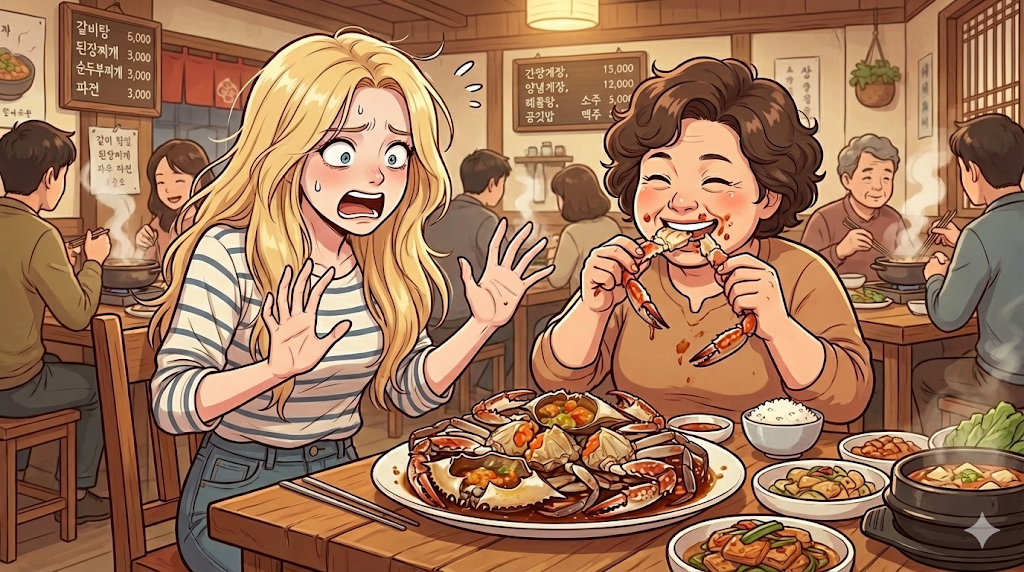
Level 1: The Korean Raw Crab Shock
Flashback: A fancy restaurant in Gangnam.
Initially, my Korean friends told me we were going for a “Premium Seafood Feast.” I expected grilled lobster. However, the waiter brought out a plate of dark, gooey Korean Raw Crab. They looked… alive. My friend cheered, “Wow! Look at the eggs!”
I poked it with my chopstick. It was jelly-like. Hesitantly, I picked up a leg and tried to bite it like a cooked crab. Instantly, a loud CRACK echoed. It wasn’t the crab; it was my jaw. The shell was hard, and the meat inside was cold and slimy.
Simultaneously, I looked at the side dish. It was chopped octopus arms, squirming on the plate. Consequently, I dropped my chopsticks. “Is this a meal or a biology experiment?” I asked. I ended up eating only plain rice.
Level 2: How to Eat Korean Raw Crab
Later, I complained to Ssam. “Ssam, why do Koreans eat raw slime? It’s terrifying.”
Ssam laughed. “Alice, you don’t bite the leg like a savage. You suck the meat out. And that ‘slime’ is the umami bomb.”
He taught me the “Rice Thief” Protocol for eating Korean Raw Crab:
1. Squeeze, Don’t Bite
The inside is soft.
- Technique: Put a plastic glove on. Squeeze the body hard. The white, creamy meat will pop out like toothpaste.
- Action: Put that meat on top of your white rice. Do not eat it alone; it is too salty.
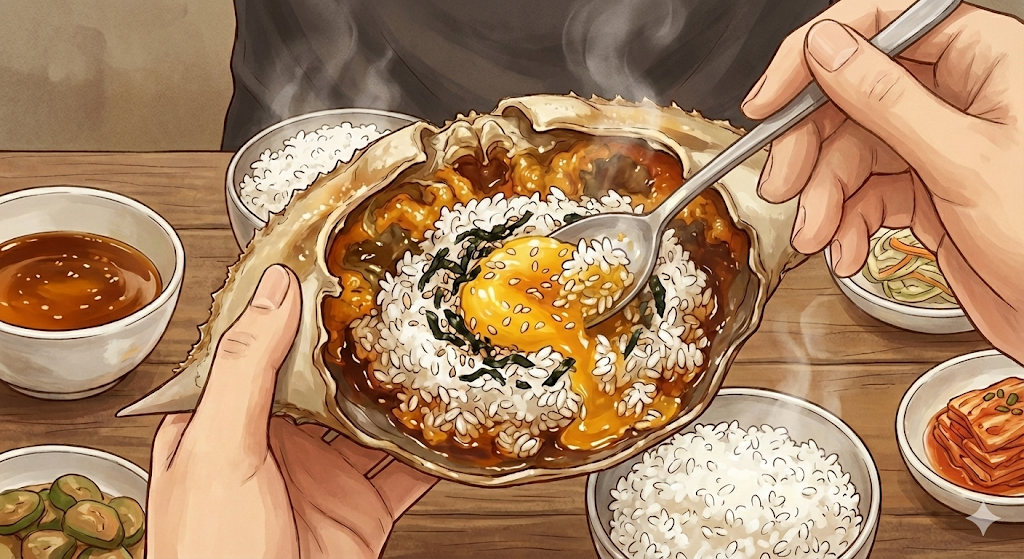
2. The Shell is the Bowl (Ge-ddak-ji)
This is the highlight of Korean Raw Crab.
- Step 1: Take the big top shell (carapace). There are guts and sauce inside.
- Step 2: Put a spoon of rice inside the shell.
- Step 3: Mix it. The bitter, savory taste of the innards mixed with rice is why we call it a “Thief.”
3. Start with Spicy (Yangnyeom)
If the Soy Sauce version (Ganjang) looks too “raw” for you, start with Yangnyeom Gejang.
- Why: It is covered in spicy red chili sauce. It looks less scary, and the spice hides the raw seafood smell.
Level 3: Ssam’s Picks (Top 3 “Horror” Foods)
Ready to challenge your taste buds? Here are the top 3 dishes including Korean Raw Crab.
1. Korean Raw Crab (Ganjang Gejang)
The boss level.
- Taste: Salty, sweet, creamy, and fishy (in a good way).
- Verdict: Once you get addicted, there is no cure.
2. San-nakji (Live Octopus)
Yes, it moves. No, it won’t kill you (if you chew well).
- Taste: It tastes like sesame oil and salt. The texture is chewy.
- Safety: Chew it thoroughly so the suction cups don’t stick to your throat.
3. Yukhoe (Raw Beef)
It is like Steak Tartare, but better.
- Style: Thin strips of raw beef mixed with pear juice, sesame oil, and an egg yolk.
- Taste: Sweet and meltingly soft. This is the easiest “Raw” food for beginners.
Level 4: Deep Dive (Ssam’s Insight)
(Why Raw?)
The Science of Fermentation
You might wonder, “Is it safe?” Historically, Koreans developed fermentation techniques to preserve food before refrigerators existed. Specifically, the soy sauce in Korean Raw Crab acts as a preservative. It cures the crab, killing bacteria while enhancing the flavor.
Therefore, it isn’t just “raw.” It is “cured.” It represents the wisdom of waiting. The longer it sits in the sauce, the deeper the flavor becomes.
Level 5: Ssam’s Secret Map (Michelin Spots)
(Where to eat safely?)
Do not eat Korean Raw Crab at a random street stall. Go to these certified places.
📍 1. Jinmi Shikdang (The Legend)
This place only sells one item: Korean Raw Crab. It is Michelin-recognized.
- Warning: You must reserve weeks in advance.
- Info: [Check Michelin Guide Page]
📍 2. Keunkiwajip (Grand Tile House)
A Michelin 1-star restaurant. Very traditional and clean.
- Location: [Click for Naver Map]
📍 3. Gwangjang Market (For Octopus)
Want to try San-nakji? Go here.
- Vibe: It is loud, crowded, and authentic. Look for “Buchon Yukhoe”.
- Location: [Click for Naver Map]
Alice’s Bottom Line: Let It Steal Your Rice
It looks scary. It sounds weird. But close your eyes and taste Korean Raw Crab with warm white rice. You might find yourself calling the police to report a “Rice Thief.”
Survival Hangul: Foodie Edition
- “밥도둑이에요.” (This is a rice thief / It’s delicious).
- “비닐장갑 주세요.” (Please give me plastic gloves).
- “살아있어요?” (Is it alive?).
Read This Next (Before You Make Another Mistake)
Full of seafood? Try other Korean flavors.