Moving house is globally ranked as one of life’s most stressful events. However, in Korea, it is transformed into a high-speed, “extreme service” spectacle. Specifically, the 2026 Korean Moving Culture centers on Pojang-isa, where professionals pack, move, and even organize your socks in your new home.
Consequently, you don’t actually have to lift a finger. Fortunately, I have Ssam to explain why we should never move on certain days and why eating black bean noodles on the floor is a mandatory ritual.
Welcome to Level 1. Let me tell you about the time I bought 50 cardboard boxes and Ssam told me to return them all!
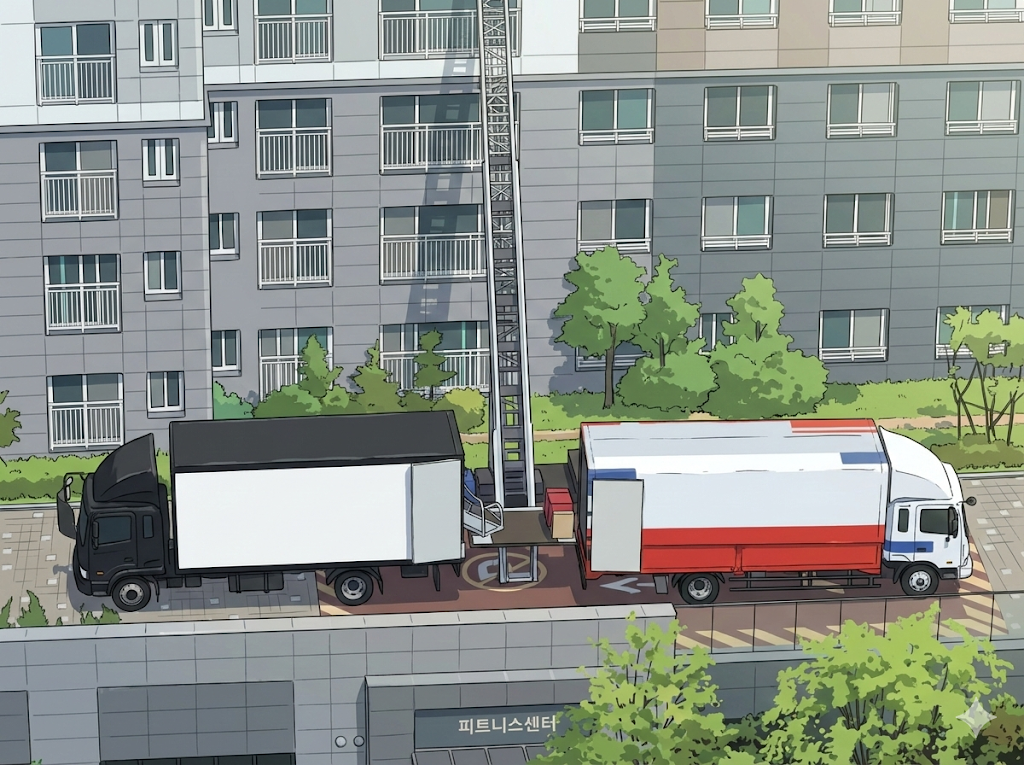
Level 1: The “Pojang-isa” Shock
Flashback: My first move from a studio to a bigger apartment.
Initially, I spent a whole week trying to pack my life into boxes. So, when the moving team arrived at 8:00 AM, I proudly showed them my packed boxes. Instead of thanking me, the leader looked confused. “Alice, why did you do all the work? We are here to do everything!” Ssam laughed.
Eventually, I watched in awe as they unpacked my boxes, re-packed them in their specialized crates, and mapped out exactly where my clothes were. For this reason, I learned that in Korea, “Moving” means you go to a cafe while the pros handle the rest.
Level 2: The Solution (Ladder Trucks and Spirits)
Immediately, Ssam shared the two things that make Korean moving unique: The “Sky Ladder” and “The Calendar.”
1. The Ladder Truck (Sadari-cha)
Specifically, because most Koreans live in high-rise apartments, they use giant exterior ladder trucks.
- The Vibe: It’s faster than using an elevator and looks like a circus act.
2. Hand-eom-neun-nal (Days without Evil Spirits)
Next, you cannot just pick any date.
- The Tradition: Koreans avoid moving on days ending in 9 or 0 (Lunar calendar) because “evil spirits” (Son) are believed to be active. Consequently, moving costs can be 10% to 20% higher on these popular “demon-free” days!
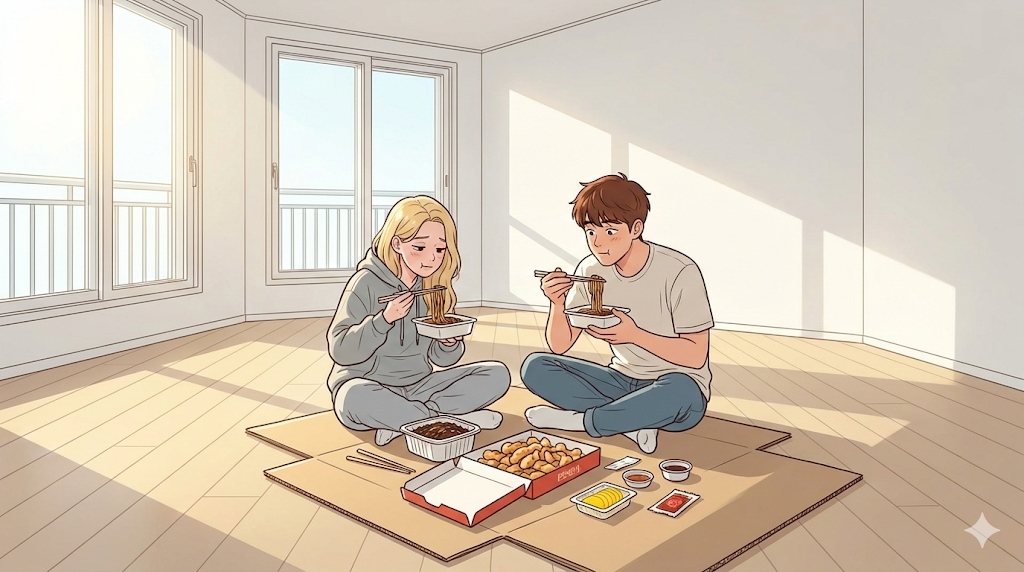
Level 3: Ssam’s Insight (The Final Ritual)
(Why Jajangmyeon?)
The Moving Day Feast
You might wonder, “Why do people eat Jajangmyeon on the floor?” Fundamentally, it’s a symbol of a fresh start. Specifically, in the past, Jajangmyeon was a rare treat. Therefore, eating it in a new house was a way to celebrate wealth and happiness.
Moreover, it’s the most practical “no-cook” meal when your kitchen is still being set up by the movers. Indeed, in 2026, even if your apartment has an AI-controlled kitchen, you still eat Jajangmyeon on the floor to keep the tradition alive.
Alice’s Bottom Line: Just Trust the Pros
The most important takeaway for Korean Moving Culture is to relax. If you hire a reputable Pojang-isa company, your only job is to check the final inventory and pay. Therefore, don’t stress about the boxes. Just find a good Jajangmyeon place nearby and enjoy the move!
Survival Hangul: Moving Edition
- “손 없는 날이 언제예요?” (Son-eom-neun-nal-i eon-je-ye-yo? / When is the day without evil spirits?)
- “짜장면 시켜주세요.” (Jajangmyeon si-kyeo-ju-se-yo. / Please order Jajangmyeon.)
- “기스 안 나게 조심해 주세요.” (Gi-seu an na-ge jo-sim-hae ju-se-yo. / Please be careful not to scratch anything.)