In most countries, “seeing a specialist” is a project that takes weeks.
However, in Korea, it is a task you can finish during your lunch break.
Specifically, the Korean Healthcare System is world-renowned for its efficiency and the National Health Insurance (NHI) that covers almost everyone.
Consequently, people in Korea go to the doctor for even a minor cold.
Fortunately, I have Ssam to explain the difference between a neighborhood “Uiwon” and a giant “Daehak Byeongwon,” so I don’t end up in the wrong line.
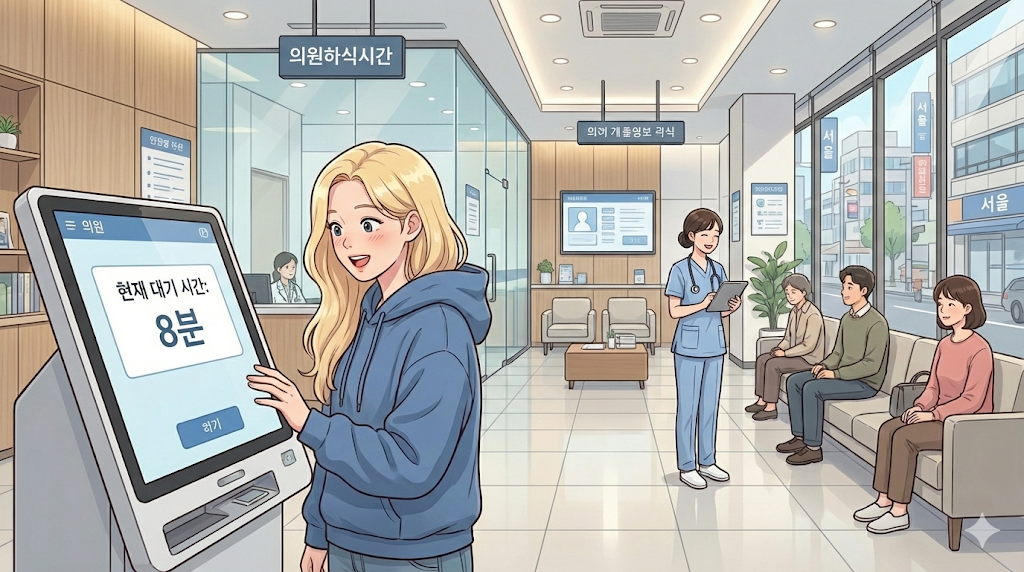
Welcome to Level 1. Let me tell you about the time I tried to book an appointment for a sore throat and Ssam just told me, “Just put your shoes on and go now.”
Level 1: The “Walk-in” Miracle
Flashback: My first winter flu in Korea.
Initially, I called a clinic to ask for an appointment next Tuesday.
So, the receptionist sounded confused.
“Alice, we don’t do appointments for basic check-ups. Just come in!” Ssam explained.
Instead of waiting for days, I walked in, scanned my ID, and saw the doctor in 15 minutes.
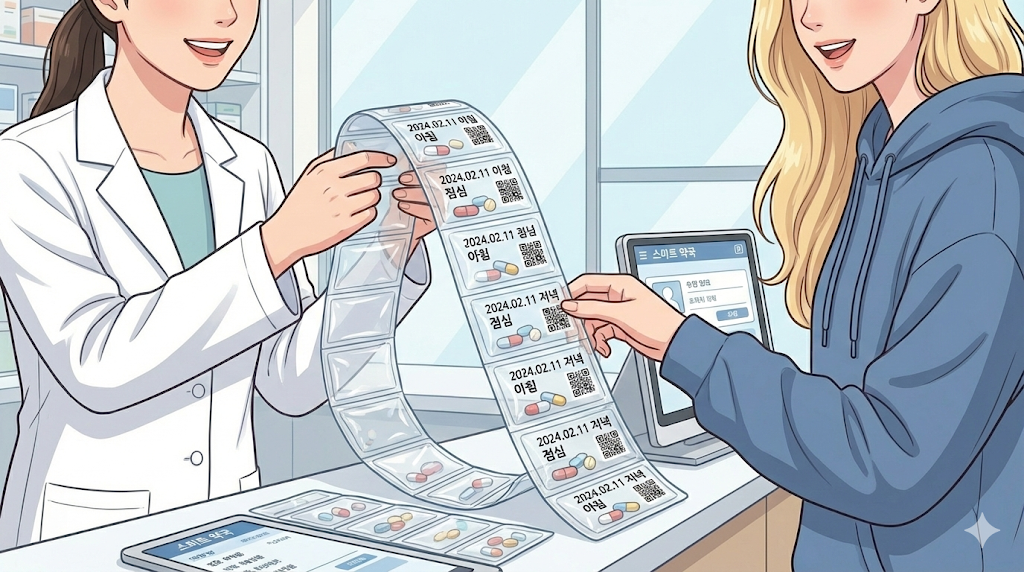
Eventually, I walked out with a prescription that cost less than a cup of coffee.
For this reason, I learned that in Korea, the medical system operates at the speed of light.
The doctor might only talk to you for 3 minutes, but they are incredibly precise.
Level 2: The Solution (Tiers of Hospitals)
Immediately, Ssam taught me that not all hospitals are the same. In Korea, there is a hierarchy.
| Type | Name (Korean) | Best For… |
| Clinic | Uiwon (의원) | Common colds, small injuries, and quick check-ups. Found on every corner! |
| General Hospital | Jonghap Byeongwon (종합병원) | Surgery, emergencies, and specialized testing. |
| University Hospital | Daehak Byeongwon (대학병원) | Serious illnesses. You usually need a referral from a clinic first. |
Note: Indeed, the National Health Insurance covers a huge portion of the cost. If you are an expat with a job or a long-term visa, you are likely already enrolled!
Level 3: Ssam’s Insight (Health-Tech in 2026)
(AI Diagnostics and Bio-Passports)
The Smart Hospital Era
You might wonder, “How can it be so fast without making mistakes?”
Fundamentally, it’s the data.
Specifically, in 2026, all your medical records are linked to your “Digital Bio-Passport.”
Therefore, when you visit a new doctor, they already know your allergies and previous prescriptions.
Moreover, AI-assisted X-rays and scans are now standard, helping doctors find issues in seconds.
Indeed, Korea has become a global hub for medical tourism because of this perfect mix of “Pali-pali” (Hurry-hurry) speed and cutting-edge reliability.
Alice’s Bottom Line: Don’t Endure the Pain
The most important takeaway for the Korean Healthcare System is that you don’t need to be “brave.”
If you feel even slightly sick, just go to the nearest clinic.
Therefore, keep your NHI card (or your digital ID) ready.
Indeed, once you experience the convenience of a 10-minute doctor visit and a $5 bill, you’ll find it hard to live anywhere else.
Survival Hangul: Hospital Edition
- “어디가 아프세요?” (Eo-di-ga a-peu-se-yo? / Where does it hurt?)
- “배가 아파요.” (Bae-ga a-pa-yo. / My stomach hurts.)
- “처방전 주세요.” (Cheo-bang-jeon ju-se-yo. / Please give me the prescription.)
Read This Next (Recommended for You)
- Wondering about the most iconic Korean food? [The Ultimate Kimchi Guide: Beyond the Spicy Red Cabbage]
- Curious about how Koreans live in these “Vertical Cities”? [Korean Apartment Culture: Inside the “Vertical Cities” of Seoul]
- Need a moment of peace after your clinic visit? [Korean Tea Ceremony Guide: A Meditative Path to Peace]