In Korea, the night doesn’t end when the bar closes; it truly ends the next morning at a steaming bowl of soup. Specifically, the concept of Haejang (releasing the hangover) is a vital part of social life. While Westerners might reach for a greasy burger or pizza, Koreans believe in “fighting fire with fire”—or rather, “fighting alcohol with hot broth.”
Consequently, if you don’t know the local recovery secrets, you might spend your entire vacation in a dark hotel room. Fortunately, I have Ssam to introduce me to the world of “Sok-puri” (soothing the stomach).
Welcome to Level 1. Let me tell you about the time I tried to cure a Soju hangover with a pepperoni pizza and realized my stomach was not happy.

Level 1: The “Greasy Pizza” Mistake
Flashback: The morning after the traditional alcohol tour.
Initially, I followed my home country’s logic: “Eat something fatty to soak up the alcohol.” So, I ordered a large pepperoni pizza. Unfortunately, the heavy cheese and oil made me feel even more nauseous.
Instead of helping, the grease made my stomach feel like a battlefield. Eventually, Ssam arrived and shook his head. “Alice, your stomach needs a warm hug, not a heavy blanket!” he said. For this reason, I learned that the Korean Hangover Cure Culture is all about hot, nutrient-rich broths that make you sweat out the toxins.
Level 2: The Solution (The “Big Three” Soups)
Immediately, Ssam took me to a 24-hour soup house. “Each soup has a different mission for your body,” he explained.
1. Haejangguk (The “Hangover Soup”)
This is the most iconic dish. It usually features a hearty beef broth with dried cabbage and sometimes oxblood or pork spine.
- The Vibe: It’s deep, savory, and spicy.
- Experience: The moment the hot liquid hits your stomach, you feel an instant “reset.”
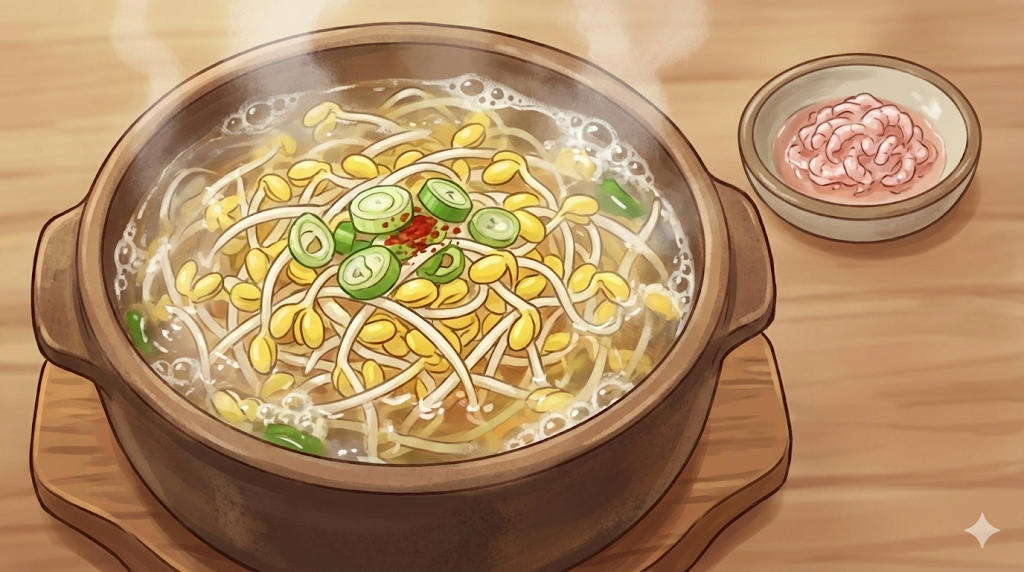
2. Kongnamul-gukbap (Bean Sprout Soup)
If you want something lighter, this is the gold standard.
- The Science: Bean sprouts are rich in asparagine, which helps break down alcohol.
- Note: It’s often served with a poached egg on the side. Indeed, it is the most scientific way to recover.
3. Ppyeo-Haejangguk (Pork Spine Soup)
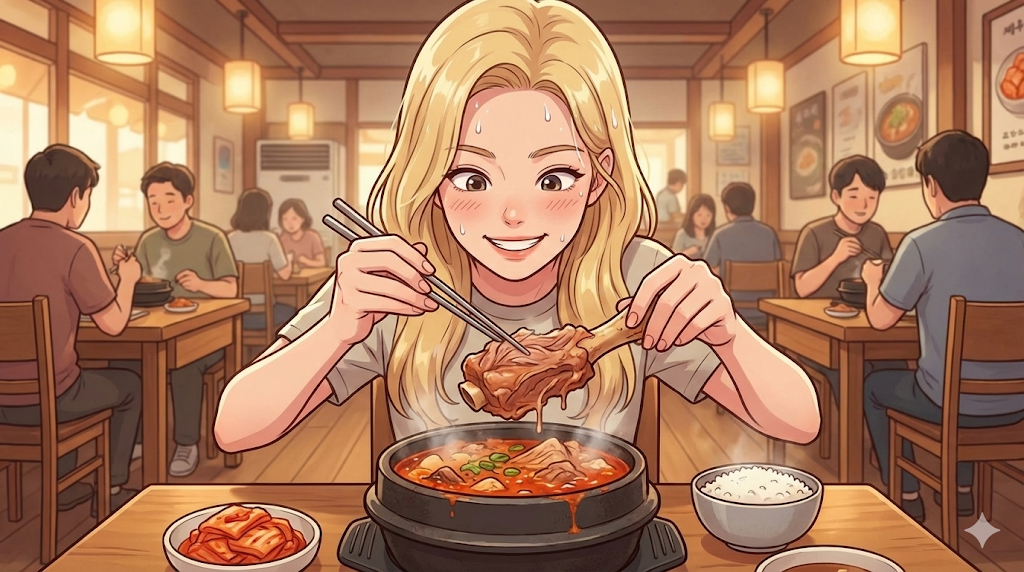
For those who need a “meat fix” even while hungover.
- The Dish: Spicy broth with tender meat falling off the bone.
- The Hack: It’s messy to eat, but the spice will make you sweat. Consequently, the alcohol leaves your body through your pores!
Level 3: Ssam’s Insight (The Convenience Store Magic)
(Before and After)
The Secret Potions
You might wonder, “What are those small bottles at the convenience store checkout?” Specifically, Korea has a massive market for “Hangover Drinks” like Condition, Dawn 808, or Hae-yeo.
Therefore, many Koreans drink one before they start drinking and another one after. In addition, chocolate milk is a surprisingly popular “Gen Z” hangover cure in 2026. Indeed, the calcium and taurine are said to coat the stomach and help with the headache.

Alice’s Bottom Line: Follow the Steam
The most important takeaway for Korean Hangover Cure Culture is to trust the soup. If you feel like you can’t move, just find the nearest “Gukbap” (soup and rice) restaurant. Therefore, don’t be afraid of the spice or the heat. Indeed, once you take that first spoonful and let out a satisfied “Ahhh,” you have officially become a local.
Survival Hangul: Hangover Edition
- “해장국 하나 주세요.”
- Pronunciation: (Hae-jang-guk ha-na ju-se-yo)
- Meaning: One hangover soup, please.
- “속이 안 좋아요.”
- Pronunciation: (Sog-i an jo-a-yo)
- Meaning: My stomach doesn’t feel good.
- “덜 맵게 해주세요.”
- Pronunciation: (Deol maep-ge hae-ju-se-yo)
- Meaning: Please make it less spicy.
Read This Next (Recommended for You)
- Now that you’re cured, let’s go have some fun! [Everland Theme Park Guide: T-Express & Panda Tips]
- Want to know why your hangover soup date changed? [Lunar vs Solar Calendar in Korea: Why Birthdays Change]
- Start another fresh day with a lucky bowl: [New Year’s Day in Korea: Why It’s a Holiday & What to Do]