In 2026, the streets of Seoul are filled with desserts that look like pieces of modern art. Specifically, Korean Dessert Culture has moved beyond simple sweets to a sophisticated balance of texture and subtle flavors. However, if you are looking for a sugar bomb that makes your teeth ache, you might be surprised by the Korean “Gold Standard.”
Consequently, the most important thing to remember is that in Korea, “Not too sweet” is the ultimate compliment. Fortunately, I have Ssam to explain why Koreans obsess over the “Chewy” (Kkeunduk) texture and the “Visual” of the plate.
Welcome to Level 1. Let me tell you about the time I tried to argue that a dessert must be sweet, and Ssam looked at me like I was a sugar-addicted alien.
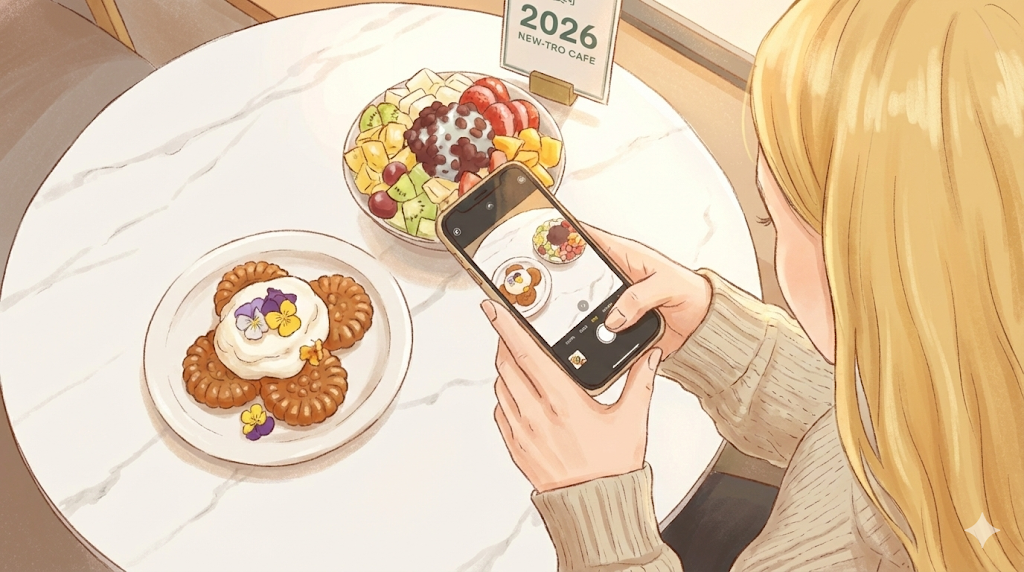
Level 1: The “Sugar Compliment” Confusion
Flashback: My first time trying a high-end Injeolmi Macaron.
Initially, I expected a burst of pure sugar like a typical Western macaron. Instead, I tasted toasted soybeans, a hint of salt, and a very subtle sweetness. So, I said to Ssam, “It’s good, but it’s not very sweet.” Surprisingly, Ssam’s face lit up. “Exactly! That’s why it’s a masterpiece!”
Eventually, I realized that for Koreans, a dessert is successful only if you can eat the whole thing without feeling “Niggul-niggul” (greasy or sickly sweet). For this reason, K-desserts focus on the natural flavors of ingredients like black sesame, mugwort, and red bean.
Level 2: The Solution (The New-tro Wave)
Immediately, I asked Ssam why everyone was lining up for “Grandma’s snacks.” “Alice, we call it ‘Halmeonnial’ (Halmeoni + Millennial) culture,” he laughed.
1. The Yakgwa Revolution
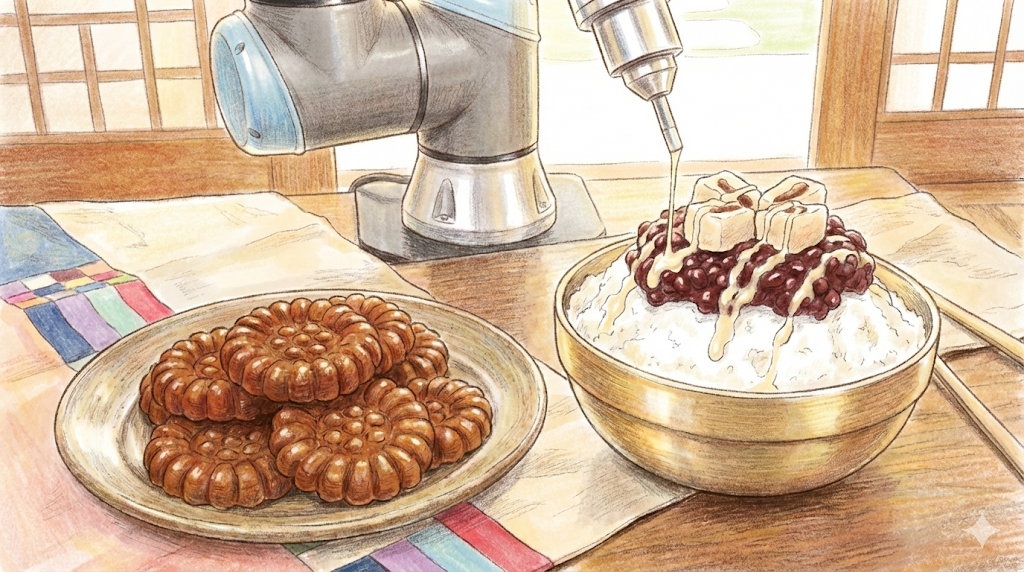
Specifically, Yakgwa (traditional honey cookies) has made a massive comeback in 2026.
- The Twist: You’ll find Yakgwa on top of ice cream, inside cookies, or even as part of a mille-feuille.
- Texture: It’s all about being “Jjeondeuk-jjeondeuk” (chewy and dense).
2. Bingsu: The Shaved Ice Masterpiece
Next, you can’t talk about Korean Dessert Culture without Bingsu.
- Evolution: In 2026, AI-powered machines shave the milk ice so thinly it feels like falling snow.
- Variety: From classic red bean to “Shine Muscat” and “Sweet Corn” flavors, it is a meal in itself.
Level 3: Ssam’s Insight (The “Visual” Before the “Taste”)
(Photos first, eating second)
The Aesthetics of 2026
You might wonder, “Why are these cafes so crowded?” Fundamentally, in Korea, you eat with your eyes first. Specifically, every dessert is designed to be “Instagrammable.”
Therefore, a cafe is judged not only by its taste but by how well the dessert matches the interior. Indeed, the combination of a high-tech “Robot Cafe” vibe and traditional “Hanok” elements creates a sensory experience that defines modern Seoul.
Alice’s Bottom Line: Embrace the Subtle
The most important takeaway for Korean Dessert Culture is to appreciate the balance. If you keep an open mind, you will discover that flavors like Mugwort (Ssuk) or Black Sesame (Heuk-im-ja) can be incredibly addictive. Therefore, don’t go looking for a sugar rush. Look for the “Not too sweet” perfection. Indeed, once you go “Jjeondeuk,” you never go back!
Survival Hangul: Dessert Edition
- “달지 않아서 좋아요.”
- Pronunciation: (Dal-ji an-a-seo jo-a-yo)
- Meaning: I like it because it’s not too sweet. (The ultimate compliment!)
- “인스타 감성 카페예요?”
- Pronunciation: (In-seu-ta gam-seong ka-pe-ye-yo?)
- Meaning: Is this an “Instagrammable” (aesthetic) cafe?
- “뭐가 제일 인기에요?”
- Pronunciation: (Mwo-ga je-il in-gi-e-yo?)
- Meaning: Which one is the most popular?
Read This Next (Recommended for You)
- Need a perfect drink to balance the sweets? [Traditional Korean Alcohol Guide: Beyond the Green Bottle]
- Want to see where these traditional flavors originated? [Traditional Korean Market Food Tour: Must-Eat Street Food Guide]
- Wondering how robots became the new dessert chefs? [Is South Korea Living in the Future? 5 Reasons It Feels Like 2077]