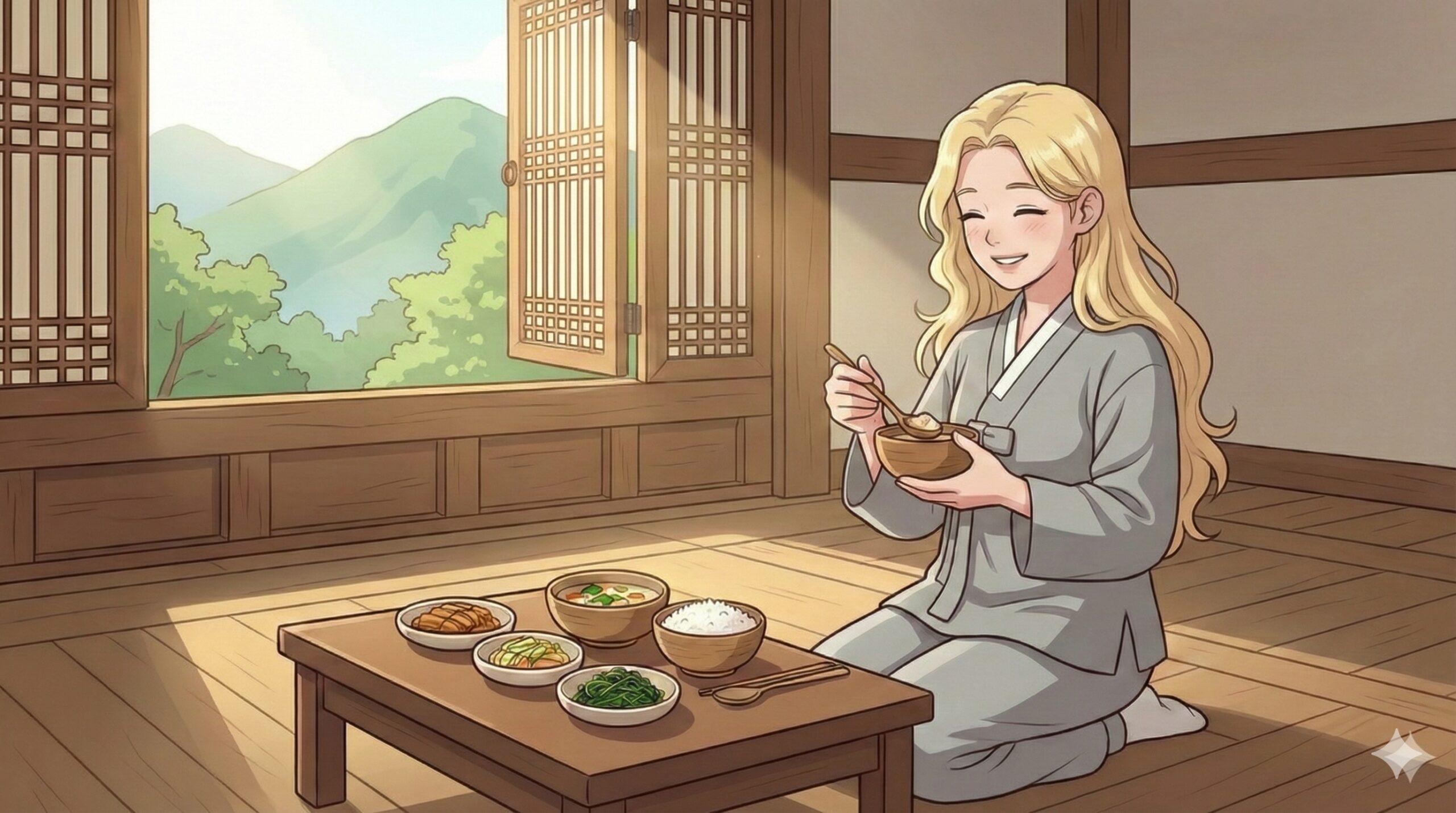
When I booked a Temple Stay in the mountains of Korea, I imagined a “Zen Retreat.” I pictured myself drinking tea, reading a book by a stream, and maybe doing some light yoga. It sounded like a spiritual vacation.
I was wrong. Temple Stay is not a vacation. It is Boot Camp for the Soul.
You wake up before the sun. You eat in silence. And you do physical exercise that makes CrossFit look easy. If you are looking for a hotel with room service, turn back now.
Welcome to Level 1. Let me tell you how I almost cried during the 108 Bows.
The Level 1 Logs: The 108 Bows of Pain
Flashback: 2 years ago. A temple in Jeolla-do.
The schedule said “3:30 AM: Morning Chanting.” I thought it was a typo. Who wakes up at 3:30 AM unless the house is on fire? But the monk woke us up with a wooden instrument (Moktak). It was pitch black outside.
Then came the 108 Bows (Baek-pal-bae). It sounds spiritual. In reality, it is a squat workout from hell. Down to knees, forehead to floor, stand up. Repeat 108 times. By bow number 50, my legs were shaking. By number 80, I was sweating through my gray uniform. By number 108, I couldn’t feel my toes.
I went there to find inner peace. I found leg cramps instead.
Enter “Ssam” (The Monk Whisperer)
I met Ssam after I returned to Seoul, walking like a penguin because my legs hurt. “Ssam, why do monks torture people? I paid to relax!”
Ssam smiled calmly. “Alice, you confuse ‘Temple Stay’ with a ‘Resort’.”
He explained the Types of Stays: “You picked the Experience Program. That is for learning discipline. If you wanted to sleep and read, you should have picked the Rest Program.”
Level 3 Wisdom: How to Choose Your Path
Don’t make my mistake. Know what you are signing up for.
1. Experience Type vs. Rest Type
- Experience Type (체험형): The full package. 108 bows, making prayer beads, chanting, tea ceremony with a monk. It is strict but rewarding.
- Rest Type (휴식형): The chill version. You participate in meal times and ceremonies if you want, but the rest of the time is yours. You can hike, sleep, or read. (Recommended for beginners).
2. The Food Ritual (Baru Gongyang)
Temple food is vegan and delicious, but the rules are strict.
- No Waste: You must eat every single grain of rice.
- The Final Rinse: In traditional temples, you pour water into your bowl, use a piece of kimchi to wipe the sauce, and then… you drink that rinse water.
- Alice’s Tip: Take a small amount of food. If you take too much, you have to eat it all (including the spicy water).
3. What to Pack (Fashion is Over)
You will wear a provided uniform (usually an ugly gray vest and pants).
- Bring: Comfortable T-shirt to wear under the vest, socks (you take shoes off constantly), and slip-on shoes.
- Leave: Tight jeans, skirts, and makeup. Nobody cares how you look at 4 AM.
Alice’s Bottom Line: Empty Your Mind (and Bowl)
Despite the leg pain, the silence of the mountain at 4 AM was magical. The air is crisp, the stars are bright, and your mind feels incredibly clear.
Just remember: If you want to sleep in, choose the Rest Type. If you want to brag that you survived boot camp, choose the Experience Type.
Survival Hangul: At the Temple
- “합장 (Hap-jang)”
- Meaning: Putting palms together to bow. (Do this when you see a monk).
- “공양 시간 언제예요? (Gong-yang si-gan eonje-yeyo?)”
- Meaning: “When is meal time?” (Don’t be late. Monks don’t wait).
- “묵언 (Mug-eon)”
- Meaning: “Noble Silence.” (If you see this sign, stop talking).
Bonus: How to Book “Jingwansa” (The Foodie’s Choice)
You might have noticed Jingwansa in the tags. There is a reason for that. Located right inside Seoul (near Eunpyeong Hanok Village), it is famous for its Temple Food. Even world-famous chefs come here to learn. If you don’t want to travel far from Seoul but want the full experience, this is the best spot.
Here is how to book your spot before it sells out.
Step 1. The Official Website
Don’t try to call them. Go to the official English reservation site. eng.templestay.com
Step 2. Search & Select
- Type “Jingwansa” in the search bar.
- Choose your program:
- Experience: Includes tea ceremony, making lotus lanterns, and conversation with monks.
- Rest: Just sleep, eat, and walk in the Bukhansan forest.
- Check the calendar. Weekends fill up very fast because of its location.
Step 3. Getting There
- Subway: Line 3 (Orange Line) to Gupabal Station or Yeonsinnae Station.
- Bus: Take a bus (e.g., #7211 or #701) to “Jingwansa Entrance.”
- Bonus: It is right next to the Eunpyeong Hanok Village. It makes for a perfect day trip: Hanok village in the afternoon, Temple Stay at night.
Alice’s Tip: Jingwansa is very foreigner-friendly. Don’t worry about the language barrier. Just worry about your leg cramps during the bows.
Bonus: Top 4 Temples in Seoul (Ssam’s List)
Jingwansa is great, but Seoul has many other “Zen Zones.” Here are the Top 4 temples recommended by Ssam, categorized by your travel style.
1. Jogyesa (The City Center)
- Vibe: Located in Insadong, it is the headquarters of Korean Buddhism. It is colorful, busy, and surrounded by skyscrapers.
- Best For: Tourists who have short time. You can visit after buying souvenirs in Insadong.
- Station: Anguk Station (Line 3) or Jonggak Station (Line 1).
2. Bongeunsa (Gangnam Style)
- Vibe: A 1,000-year-old temple right across from the COEX Mall. You can see a giant Buddha statue with the Gangnam skyline in the background.
- Best For: People who want to mix shopping and spirituality.
- Station: Bongeunsa Station (Line 9).
3. Jingwansa (The Foodie & History)
- Vibe: Located in Bukhansan National Park, next to the Eunpyeong Hanok Village. Famous for Temple Food and independence movement history.
- Best For: Nature lovers and foodies.
- Station: Gupabal Station (Line 3) + Bus.
4. Geumsunsa (The Mountain Retreat)
- Vibe: Deep inside Bukhansan mountain. It feels like you are far away from the city. It focuses on meditation and hiking.
- Best For: People who really want to sweat and meditate. (Requires some hiking to get to the entrance).
- Station: Gyeongbokgung Station (Line 3) + Bus + Hike.
How to Find Them: Naver Map Cheat Code
Don’t copy-paste the English address into Google Maps. It will fail you. Use Naver Map or KakaoMap like a local.
Step 1. Copy the Korean Name The search works best in Hangul. Copy these:
- Jogyesa: 조계사
- Bongeunsa: 봉은사
- Jingwansa: 진관사
- Geumsunsa: 금선사
Step 2. Paste into the App Open Naver Map -> Paste the Korean name -> Click the “Blue Bus” icon (Public Transport).
Step 3. Follow the Color Line The app will show you the exact subway exit and bus number. Trust the app. It knows better than you.
Read This Next (Before You Make Another Mistake)
Did you find inner peace? Now let’s get back to the chaotic city.
- Legs hurt from 108 bows? Treat yourself to a spa day. [The Naked Truth: Jimjilbang Survival Guide]
- Hungry for meat after vegan temple food? Go grill some pork. [The Art of K-BBQ: How to Eat “Ssam” Correctly]
- Going hiking near the temple? Wear the right shoes. [The Bukhansan Trap: Hiking Survival Guide]