Many people think Kimchi is just one type of spicy cabbage. Specifically, there are over 200 varieties of Kimchi in Korea. Just as you pair red wine with steak, Koreans have a specific Kimchi Pairing Guide for every meal to maximize the flavor.
However, if you eat the wrong type of Kimchi with a delicate dish, it can overwhelm your taste buds. Therefore, learning these 4 essential pairings will make you look like a true Korean food expert.
Welcome to Level 1. Let me tell you about the time I tried to eat “Sour Old Kimchi” with a fresh bowl of noodles and realized I was doing it all wrong.
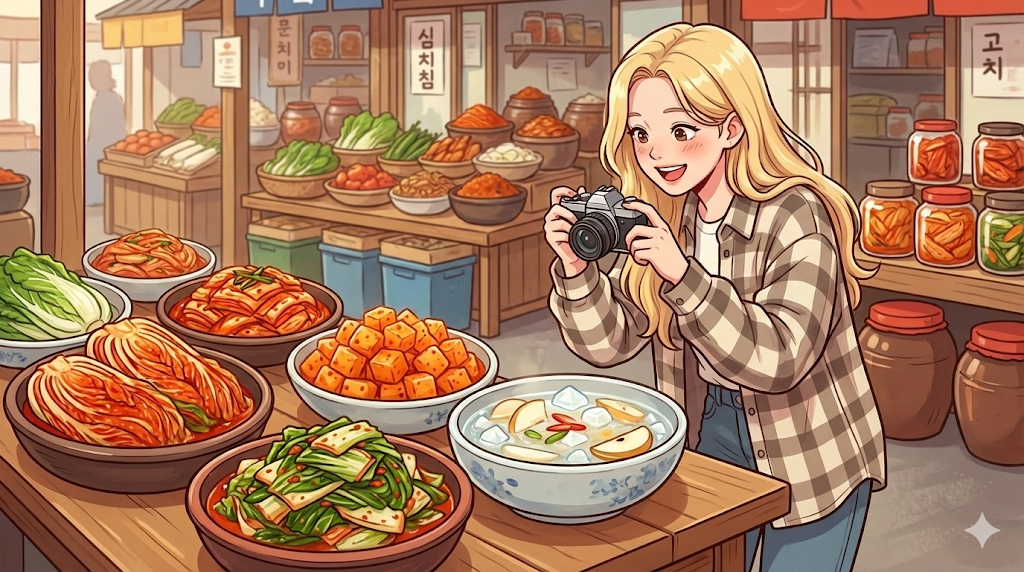
Level 1: The “Sour Noodle” Mistake
Flashback: My first visit to a famous Kalguksu (Hand-cut noodle) shop.
Initially, I thought the older the Kimchi, the better. So, I asked for the most fermented, sour Kimchi I could find. Unfortunately, the sourness of the Kimchi completely killed the mild, savory flavor of the noodle broth.
Instead of enjoying the meal, I felt like I was eating vinegar-soaked noodles. Eventually, Ssam pointed at a pile of freshly made, bright red Kimchi on the next table. “Alice, for noodles, you need Geotjeori (Fresh Kimchi),” he said. For this reason, I learned that the “Age” of Kimchi matters just as much as the type.
Level 2: The Essential Kimchi Pairing Guide
Follow these 4 golden rules to enhance your K-food experience.
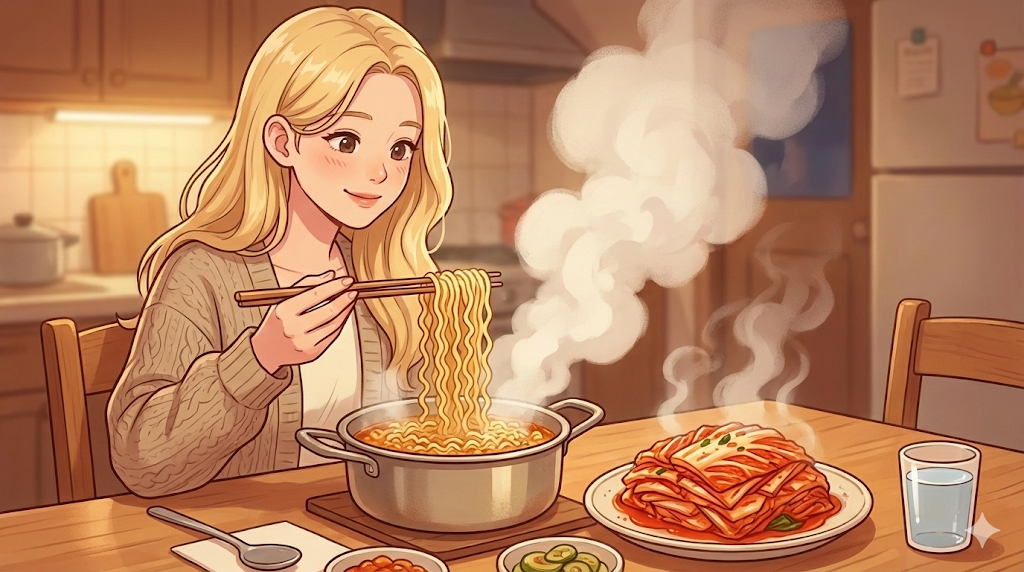
1. Ramyeon + Well-Ripened Baechu Kimchi
This is the most legendary duo in Korea.
- The Match: Fully fermented cabbage Kimchi that has a bit of a “tang.”
- Why: The acidity of the Kimchi cuts through the oiliness of the ramen broth. Indeed, it refreshes your palate after every spicy slurp.
2. Seolleongtang (Beef Bone Soup) + Kkakdugi
When eating a rich, milky beef soup, you need a crunch.
- The Match: Kkakdugi (Diced Radish Kimchi).
- The Secret: The sweet and spicy juice of the radish blends perfectly with the savory bone broth. Consequently, many Koreans even pour the radish juice directly into their soup!

3. Kalguksu (Noodle Soup) + Geotjeori
For fresh, flour-based noodles, you need something that hasn’t fermented yet.
- The Match: Geotjeori (Freshly made Kimchi).
- Texture: It is crunchy, salty, and sweet because it hasn’t turned sour. Furthermore, the fresh garlic aroma complements the warm noodles beautifully.
4. Roasted Meat (BBQ) + Grilled Mueun-ji
When eating fatty pork belly (Samgyeopsal), you need something powerful.
- The Match: Mueun-ji (Long-aged, sour Kimchi).
- The Hack: Place the sour Kimchi on the grill next to the meat. By doing this, the Kimchi absorbs the pork fat and becomes a caramelized, savory bomb.

Level 3: Ssam’s Insight (The Science of Fermentation)
(Why does it work?)
Balance of Probiotics and Flavor
You might wonder, “Why do Koreans care so much about these combinations?” Fundamentally, Kimchi is a living food. Specifically, as it ferments, its pH level drops and it develops lactic acid.
Therefore, certain foods need that acidity to aid digestion (like BBQ), while others need the fresh, crisp texture to add contrast (like Noodles). Indeed, the Kimchi Pairing Guide is actually a tradition rooted in health and digestive science.
Alice’s Bottom Line: Look at the Color and Texture
The most important takeaway is to observe the Kimchi before you eat. If it looks translucent and soft, it’s probably sour and perfect for stews or BBQ. On the other hand, if it looks bright red and the leaves are still stiff, it’s fresh and perfect for noodles. Indeed, once you master these pairings, your friends will think you were born in Seoul!
Survival Hangul: Kimchi Edition
- “겉절이 좀 더 주세요.”
- Pronunciation: (Geot-jeo-ri jom deo ju-se-yo)
- Meaning: Please give me some more fresh Kimchi.
- “이 김치 많이 익었나요?”
- Pronunciation: (I gim-chi ma-ni ik-eon-na-yo?)
- Meaning: Is this Kimchi well-ripened (sour)?
- “깍두기가 맛있어요!”
- Pronunciation: (Kkak-du-gi-ga mat-it-seo-yo!)
- Meaning: The radish Kimchi is delicious!
Read This Next (Recommended for You)
- Ready to cook your own noodles? [Easy Japchae Recipe: Non-Sticky & Colorful Glass Noodles]
- Need a spicy base for your Kimchi? [Soft Tofu Stew Recipe: The Ultimate Comfort Food Guide]
- Wondering about more spicy options? [5 Spicy Korean Food Recommendations for Heat Lovers]