If you want to understand the “soul” of the Korean people, you must look at their struggle for freedom. Specifically, the Independence Hall of Korea in Cheonan is the most important landmark dedicated to this history. Furthermore, it is not just a museum filled with old papers; it is a massive park where you can feel the pride of a nation.
However, many tourists skip this place because it is located outside Seoul. Consequently, they miss out on the incredible stories of bravery that shaped modern Korea.
Welcome to Level 1. Let me tell you about the time I realized that the Korean flag (Taegeukgi) is much more than just a design.
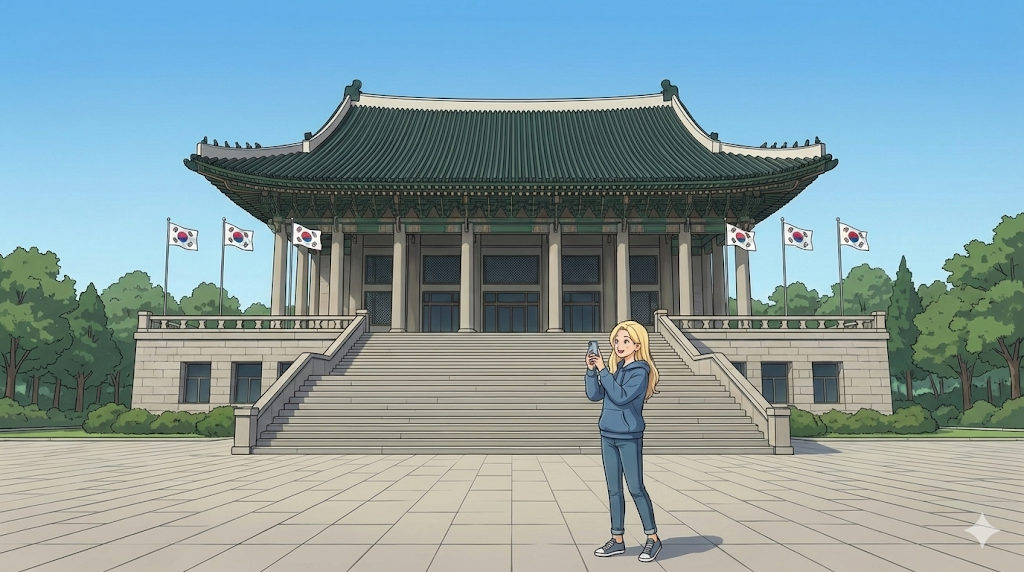
Level 1: More Than Just a Flag
Flashback: A sunny spring day in Cheonan.
Initially, I thought the Independence Hall of Korea would be a boring, dusty place. Instead, I was greeted by the “Taegeukgi Hanmadang”—a field filled with hundreds of Korean flags waving in the wind. Surprisingly, seeing so many flags at once made my heart race.
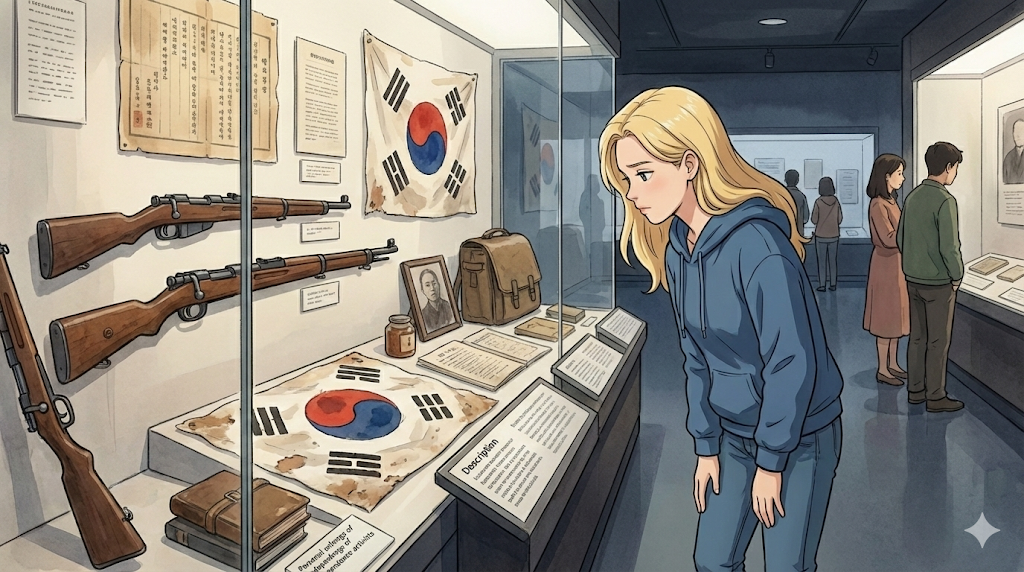
Eventually, I entered the exhibition halls. First, I saw the torture devices used by invaders. Second, I saw the letters written by young freedom fighters. Immediately, I understood that the freedom I enjoy in Seoul today was paid for with blood and tears. Therefore, I stopped taking “cute selfies” and started reading every single caption.
Level 2: The Solution (How to Visit Properly)
Later, I asked Ssam why this place is so huge. “Alice, it was built with donations from the Korean people,” Ssam explained. “It represents our collective memory.”
Here is how to visit the Independence Hall of Korea like a pro.
1. Getting to Cheonan
First, you need to leave Seoul.
- KTX: Take the high-speed train to Cheonan-Asan Station (35 minutes).
- Bus: Take an express bus from Seoul Express Bus Terminal to Cheonan Terminal.
- Final Leg: Take a local bus or taxi (20 minutes) to the Hall.
2. Take the “Taeguk Train”
The grounds are massive (nearly 4 million square meters!).
- The Hack: Do not try to walk the whole way.
- Action: Pay a small fee for the Taeguk Train (shuttle) that takes you from the entrance to the main exhibition halls. By doing this, you save your energy for the museum.
3. Focus on Exhibition Hall 3 & 4
There are 7 halls in total. If you are short on time, prioritize these:
- Hall 3: Focuses on the Independence Movement.
- Hall 4: Displays the struggle and the cry for freedom (March 1st Movement).
- The Experience: In addition, don’t miss the 4D theater for an immersive historical experience.
Level 3: Ssam’s Insight (The Spirit of Resilience)
(Why is it in Cheonan?)
The Home of Heroes
You might wonder, “Why not build it in Seoul?” Fundamentally, Cheonan is the hometown of many legendary patriots, including Yu Gwan-sun, the teenage girl who led the March 1st Movement. For this reason, the location carries a spiritual weight that Seoul cannot offer.
Moreover, it serves as a “Learning Ground.” Unlike typical tourist spots, you will see many Korean families teaching their children about their ancestors. Consequently, visiting here is the best way to witness the core values of Korean society: Respect and Grit.
Level 4: Ssam’s Secret Tip (Walnut Cakes!)
(Reward your stomach after history)
Cheonan is famous for one more thing: Hodu-gwaja (Walnut Cakes).
- What: Small, round cakes filled with sweet red bean paste and a piece of walnut.
- Where: You can find them right outside the Independence Hall of Korea or at Cheonan Station.
- Taste: They are best when they are hot. Indeed, it is the official snack of Cheonan.
Level 5: The “Gourmet” Finish (Nearby Eats)
After walking through the massive grounds of the Independence Hall of Korea, your stomach will definitely be growling. Fortunately, the area around the hall (Mokcheon-eup) is a goldmine for traditional Korean comfort food.
Here are Ssam’s top picks to refuel your body and soul.
1. Sun-yu-won (선유원) – The Rib Master
If you love BBQ but hate the smoke, this is your place.
- Signature: Seok-galbi (Stone-grilled Pork Ribs). The ribs are fully cooked over charcoal and served on a sizzling stone plate.
- The “Rice Thief”: Specifically, their spicy marinated crab (Yangnyeom-gejang) is so famous that people buy it by the bucket to take home.
- Alice’s Tip: Wrap the sweet, smoky meat in a lettuce leaf with a bit of garlic. It is pure bliss.
2. Si-gol Son-du-bu (시골손두부) – Healthy Comfort
Need something warm and healthy? Go for the tofu.
- Signature: Du-bu-jeon-gol (Tofu Hot Pot). They use 100% Korean soybeans to make fresh tofu every morning.
- Vibe: It feels like eating at a Korean grandma’s house. It is perfect for families with kids or elderly parents.
- Review: “The tofu is so creamy and the broth is clean. I felt like I was being healed with every bite!”
3. Hong-du-kkae Son-kal-guk-su (홍두깨손칼국수) – Budget Friendly
On a rainy day or a tight budget?
- Signature: Son-kal-guk-su (Hand-cut Noodles). For around 5,000~8,000 KRW, you get a massive bowl of chewy, hand-kneaded noodles in a deep anchovy broth.
- Texture: You can tell it’s handmade because the noodle thickness varies slightly. Indeed, that’s the charm.
Level 6: Dessert & Vibe (Cafes)
Cafe Mokcheon (카페 목천)
After a heavy meal, head to this “Forest View” cafe.
- Vibe: It has massive windows facing a lush forest. It’s the perfect place to edit your photos from the Independence Hall.
- Must Try: Peach Bingsu (in summer) or their signature Injeolmi (Grain) drinks.
Alice’s Bottom Line: History First, Food Second
Don’t just visit the museum and leave. Instead, stay for lunch. If you eat a hot meal of Seok-galbi or Tofu stew, the history of the Independence Hall of Korea will taste even sweeter.
Survival Hangul: Foodie Edition
- “근처에 맛있는 식당 있어요?”
- Pronunciation: (Geun-cheo-e mat-it-neun sik-dang eo-tteo-ke ga-yo?)
- Meaning: Is there a good restaurant nearby?
- “석갈비 2인분 주세요.”
- Pronunciation: (Seok-gal-bi i-in-bun ju-se-yo)
- Meaning: Please give me two servings of Seok-galbi.
Read This Next (Before You Make Another Mistake)
Done with history? Explore more of Korea.