Move over, Sriracha! There is a new global superstar in town. Recently, Gochujang Trends have taken over social media, transforming the traditional Korean chili paste into a versatile fusion ingredient. Specifically, the “Rosé” movement—mixing spicy paste with heavy cream—is the hottest food trend right now.
However, this fermented sauce is much more than just “spicy ketchup.” Because it is a fermented paste, it adds a deep “Umami” flavor that you cannot get from regular chili sauce.
Welcome to Level 1. Let me tell you how I tried to use it like jam and almost set my mouth on fire.
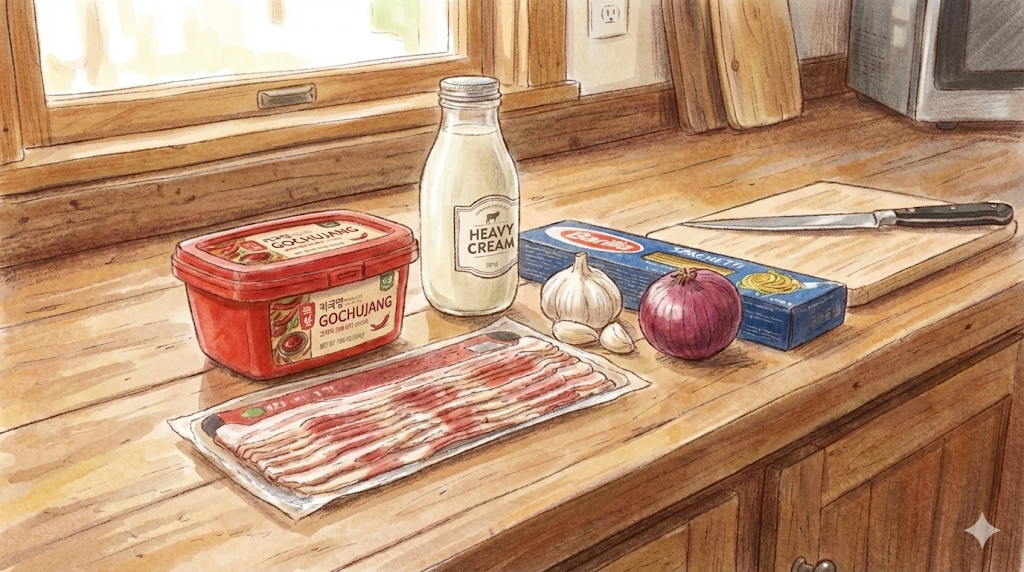
Level 1: Misunderstanding Gochujang Trends
Flashback: My first attempt at fusion cooking.
Initially, I thought this paste was just a sweet and spicy sauce, similar to BBQ sauce. Consequently, I decided to make a “Gochujang Toast” for breakfast. Instead of using a small amount, I spread a thick layer on my bread, just like strawberry jam.
Unfortunately, the result was a nightmare. First, the saltiness was overwhelming. Second, the heat hit my throat like a freight train. Eventually, I realized that this ingredient is a “base” for cooking, not a “topping.” Therefore, I had to learn how to follow modern Gochujang Trends properly by balancing its strong personality.
Level 2: Following Gochujang Trends (Spicy Rosé)
Immediately, I asked Ssam for help. “Ssam, how do I make this taste like a gourmet meal instead of a fire hazard?”
Ssam smiled. “Alice, the secret of current Gochujang Trends is ‘Dilution and Harmony.’ You need cream to tame the dragon.”
Here is the easiest way to make the trendy Gochujang Rosé Pasta.
Step 1: Aromatics First
First, you must create a flavor base.
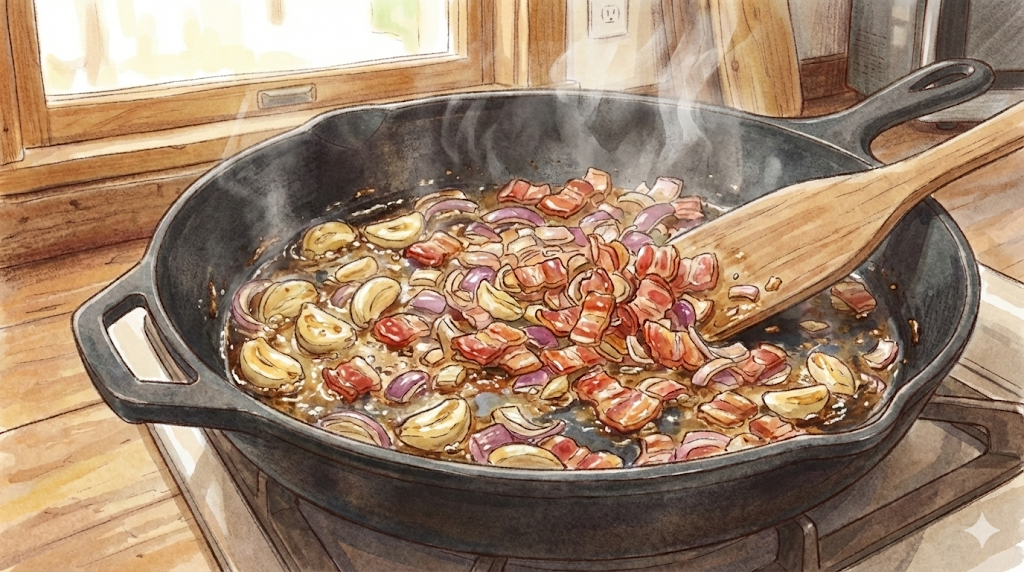
- Action: Sauté minced garlic and chopped onions in olive oil until they are golden brown.
- In addition: Add chopped bacon or shrimp for extra savory goodness.
Step 2: The “Umami” Core
Next, add the magic ingredient.
- The Ratio: For one serving, use exactly 1 tablespoon of Gochujang.
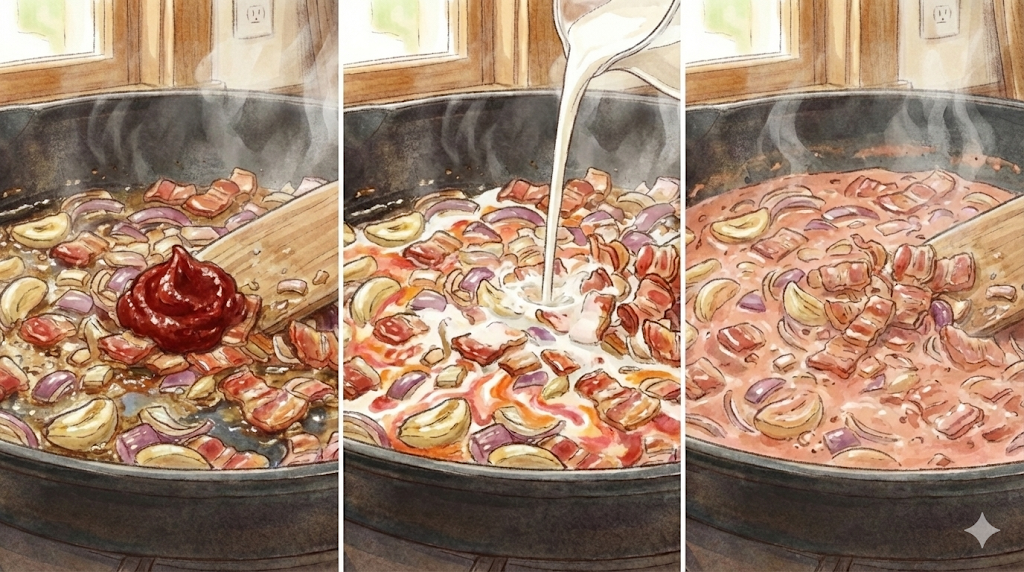
- Technique: Stir-fry the paste with the garlic and oil for 1 minute. By doing this, you remove the “raw” smell and enhance its nutty flavor, a common tip in Gochujang Trends.
Step 3: Taming the Dragon (Cream Time)
Subsequently, pour in the cream.
- The Hack: Use a 1:2 ratio of paste to Heavy Cream (or milk).
- Visual: Watch the dark red paste turn into a beautiful, silky pink sauce. Indeed, this is why it is called “Rosé.”
Step 4: Finishing the Masterpiece
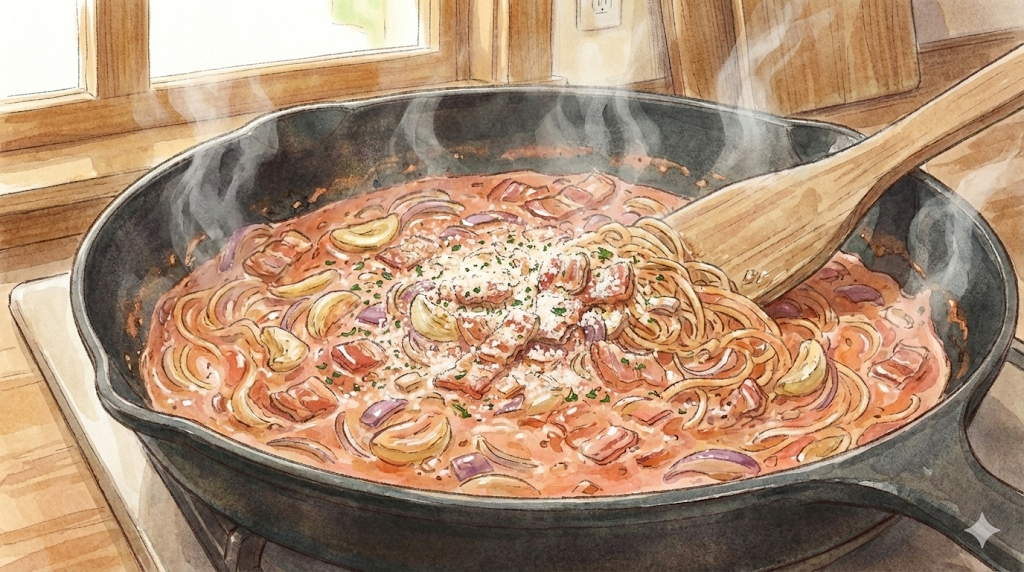
Finally, add your al dente pasta.
- Pro Tip: Add half a ladle of “Pasta Water” (the salty water used to boil the noodles). Consequently, the sauce will stick perfectly to the pasta.
- Garnish: Top with Parmesan cheese and a pinch of parsley.
Level 3: Expanding on Gochujang
Once you master the pasta, try these other popular variations:
- Gochujang Butter: Mix softened butter with a teaspoon of the paste. It is a game changer for steak.
- Gochujang Mayo: Perfect for dipping fries or spreading on burgers.
- K-Tteokbokki Rosé: Use the same sauce for rice cakes instead of pasta.
Level 4: Deep Dive (Ssam’s Insight)
(The Power of Fermentation)
You might wonder, “Why is everyone obsessed with Gochujang Trends lately?” Fundamentally, it is about the Umami. Unlike hot sauces that only provide “heat,” this paste is fermented for months. During this time, the proteins break down into savory amino acids. For this reason, it adds a “depth” to your dish that simple salt or pepper cannot achieve.
Therefore, Western chefs often refer to it as “Asian Miso with a kick.”
Level 5: Ssam’s Secret Map (Where to Learn More)
(Explore these resources for more inspiration)
- Official Recipes: [Bon Appétit’s Guide to Gochujang]
- Traditional Method: [Maangchi’s Homemade Gochujang Guide]
- Gochujang History: [The New York Times: Gochujang’s Global Rise]
Alice’s Bottom Line: Start Small
Gochujang is powerful. Rather than using it like ketchup, treat it like a concentrated seasoning. If you balance it with cream or butter, you will discover a whole new world of flavor. Indeed, follow these Gochujang Trends, and your dinner guests will think you are a professional chef.
Survival Hangul: Spicy Edition
- “안 맵게 해주세요.” (Please make it not spicy.)
- “고추장 조금만 넣어주세요.” (Please put just a little Gochujang.)
- “진짜 맛있어요!” (It’s really delicious!)
Read This Next (Before You Make Another Mistake)
Done with the pasta? Explore more K-flavors.