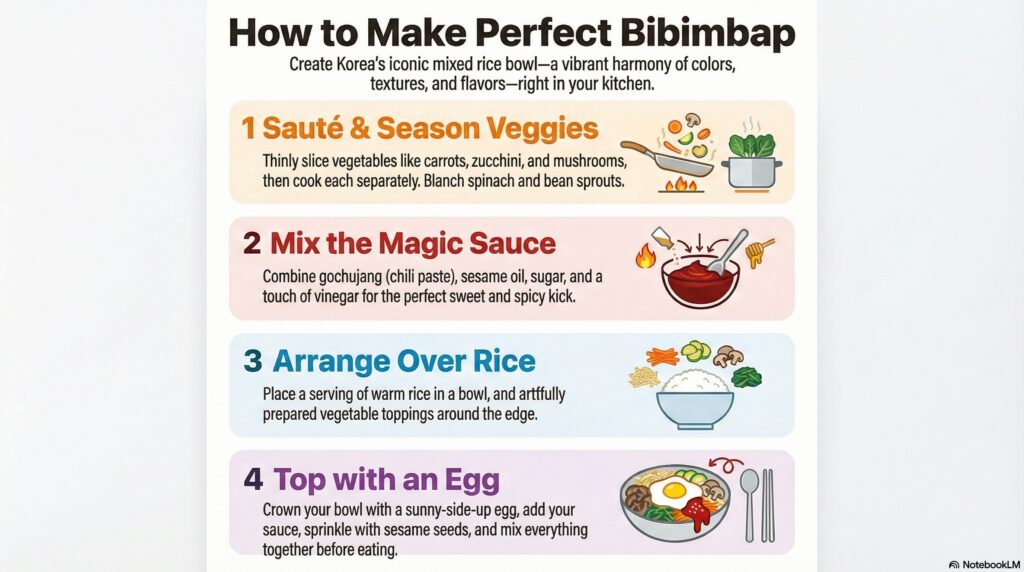
If you are looking for a meal that is visually stunning, nutritionally balanced, and incredibly delicious, Bibimbap is your answer. Specifically, the word “Bibim” means mixing and “Bap” means rice. However, many beginners treat it like a “kitchen sink” salad and throw everything in raw, which often results in a soggy mess.
Consequently, you need to understand the harmony of the five traditional colors (Obangsaek). Fortunately, I have a method that is simple enough for a weekday dinner but fancy enough for guests.
Welcome to Level 1. Let me tell you about the time I tried to make “Instant Bibimbap” and ended up with a bowl of sad, wet vegetables.
Level 1: The “Cold Leftover” Disaster
Flashback: My first attempt at healthy eating.
Initially, I thought Bibimbap was just a way to use up cold leftovers from the fridge. So, I took cold rice and dumped raw, unseasoned carrots and cucumbers on top. Unfortunately, when I added the Gochujang, the flavors didn’t blend at all.
Instead of a warm, comforting meal, I was eating crunchy, cold rice with a spicy paste that felt out of place. Furthermore, I didn’t add any sesame oil, so the whole bowl felt dry and difficult to swallow. Eventually, I realized that every topping needs a little bit of “love” (sautéing) to shine. For this reason, I turned to Ssam for the golden rules of mixing.
Level 2: The Solution (The Golden Rule of Toppings)
Immediately, Ssam emphasized the importance of individual preparation. “Alice, the secret to an Easy Bibimbap Recipe is sautéing each vegetable separately with a pinch of salt. This preserves their unique colors and textures.”
Follow these steps for a perfect bowl:
Step 1: Prepare the Rainbow (Vegetables)
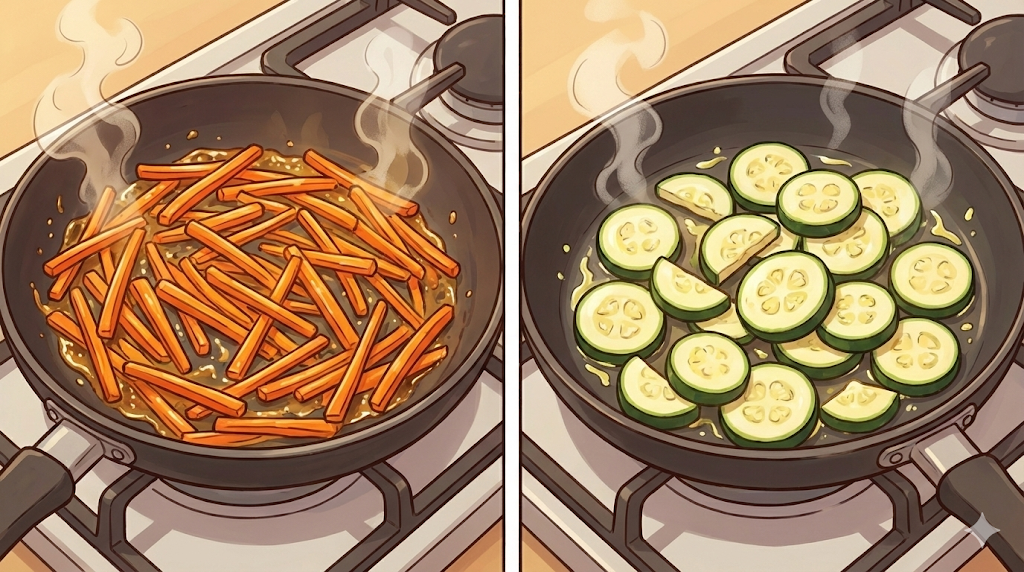
First, slice your vegetables into thin strips.
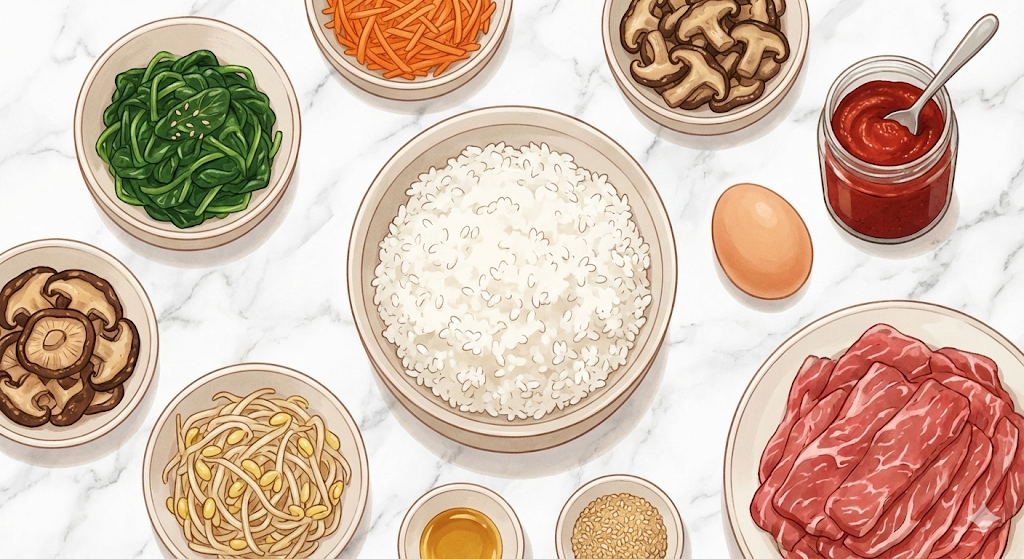
- Selection: Carrots, zucchini, and mushrooms work best.
- Action: Lightly sauté each vegetable in a pan with a drop of oil and a tiny pinch of salt.
- Note: Blanch the spinach and bean sprouts in boiling water for 30 seconds, then squeeze out the water and season with sesame oil.
Step 2: The Protein and the Sauce
Next, prepare your main flavor elements.
- Beef: Stir-fry thinly sliced beef with a spoonful of soy sauce and sugar.
- The Magic Sauce: In a small bowl, mix 2 tbsp of Gochujang, 1 tbsp of sesame oil, 1 tbsp of sugar (or honey), and 1 tbsp of water. By doing this, the thick paste becomes a smooth, pourable sauce.

Step 3: The Sunny-Side-Up Finish
Subsequently, it is time to assemble.
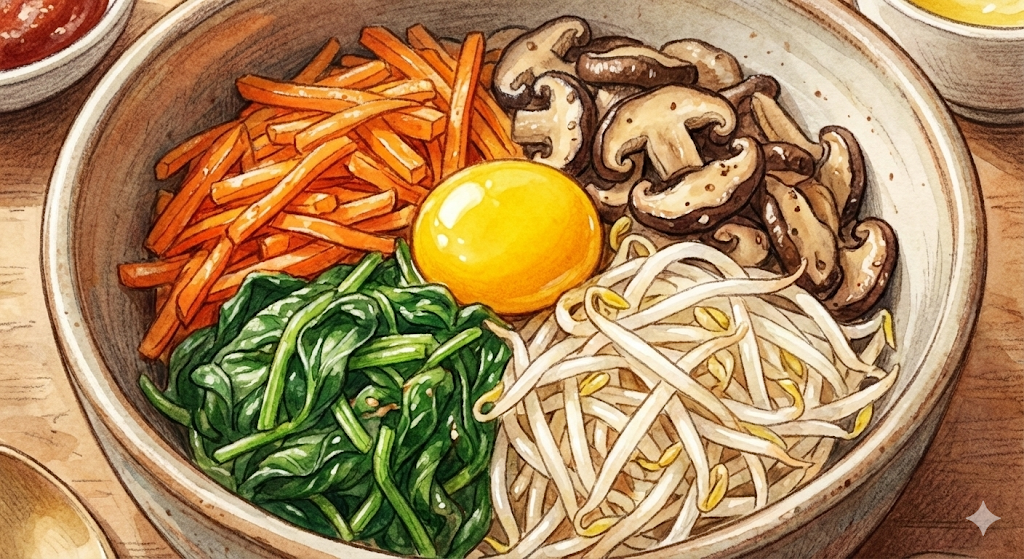
- Assembly: Place a warm bowl of rice at the bottom and arrange your colorful vegetables in a circle on top.
- The Star: Fry an egg sunny-side-up and place it right in the center.
- Final Touch: Drizzle a generous amount of sesame oil over everything.
Level 3: Ssam’s Insight (The Art of Mixing)
(Why mix it so much?)
The Science of “Bi-bim”
You might wonder, “Why do Koreans spend so much time mixing it before eating?” Historically, Bibimbap was a ritual food eaten at the end of the year to clear out the pantry. Specifically, the act of mixing with a spoon (not chopsticks!) allows the oils and sauces to coat every single grain of rice.
For this reason, the egg yolk acts as a natural “emulsifier” that brings the spicy sauce and the rice together into one harmonious flavor. Indeed, the more you mix, the better it tastes!
Alice’s Bottom Line: Sauté is the Key
The most important takeaway of this Easy Bibimbap Recipe is that you shouldn’t be lazy with the vegetables. If you take 30 seconds to sauté each topping, the texture becomes infinitely better. Therefore, respect the colors and don’t forget the sesame oil! Indeed, your body will thank you for this healthy, vibrant feast.
Survival Hangul: Bibimbap Edition
- “고추장 좀 더 주세요.”
- Pronunciation: (Go-chu-jang jom deo ju-se-yo)
- Meaning: Please give me some more Gochujang.
- “비벼 드릴까요?”
- Pronunciation: (Bi-byeo deu-ril-kka-yo?)
- Meaning: Would you like me to mix it for you? (Often asked by kind restaurant staff!)
- “참기름 많이 넣어주세요.”
- Pronunciation: (Cham-gi-reum ma-ni neo-eo-ju-se-yo)
- Meaning: Please put in a lot of sesame oil.