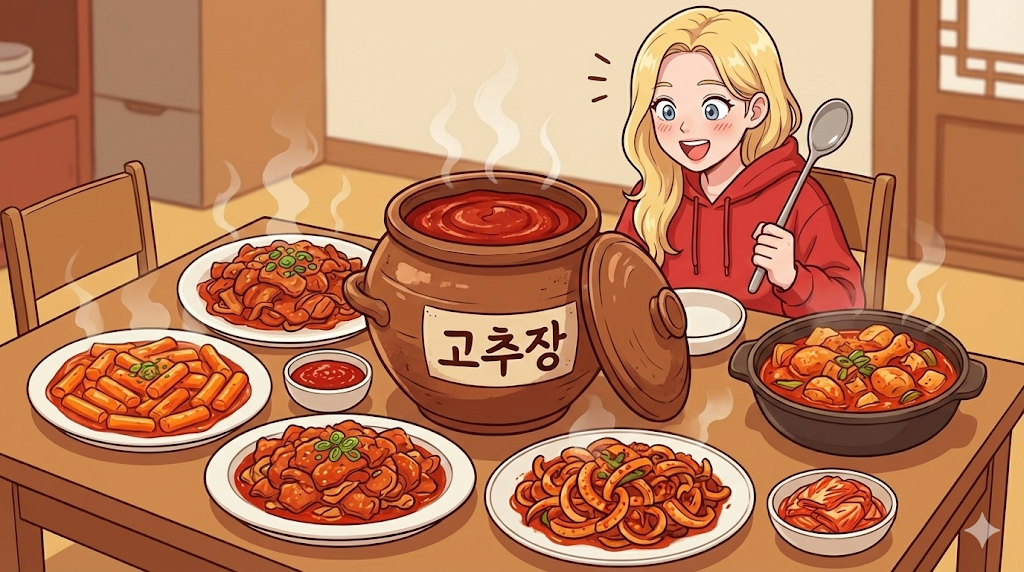
When you visit Korea, you will see a lot of red food. Initially, many foreigners assume that all these dishes taste the same because they are all spicy. However, once you taste them, you will realize that Gochujang Dishes have completely different personalities.
The secret lies in how the fermented chili paste is balanced with sugar, garlic, and soy sauce. Consequently, some are sweet and chewy, while others are deep and savory.
Welcome to Level 1. Let me tell you how I thought I was eating the same “red sauce” every day until Ssam corrected me.
Level 1: The “Everything is Red” Mistake
Flashback: My first week in Seoul.
At first, I was overwhelmed by the color red in every restaurant. Because I saw Gochujang everywhere, I thought the taste would be a monotonous “spicy heat.” In fact, I even joked that Koreans just put the same sauce on everything.
Unfortunately, I was very wrong. First, I tried a stew that was deeply salty. Second, I tried a stir-fry that was sweet and smokey. Eventually, I realized that the “red” was just the beginning. Therefore, I asked Ssam to help me categorize these amazing Gochujang Dishes.
Level 2: The Solution (The Top 5 Selection)
Immediately, Ssam sat me down and explained the “Gochujang Spectrum.” “Alice, you need to understand the main ingredient to appreciate the paste,” he said.
Here are the most iconic Gochujang Dishes you must try.
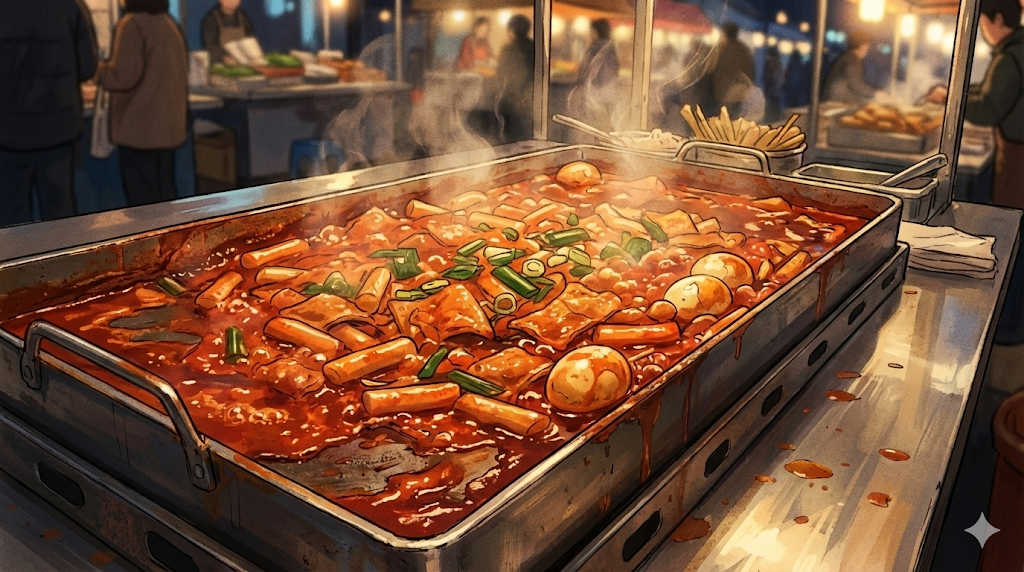
1. Tteokbokki (The Soul Snack)
This is the most famous street food in Korea.
- The Base: Gochujang mixed with sugar or corn syrup.
- The Taste: Sweet, spicy, and chewy.
- Experience: It is the ultimate comfort food for students and office workers alike.
2. Bibimbap (The Balanced Harmony)
Gochujang acts as the “glue” that brings vegetables and rice together.
- The Sauce: “Yak-gochujang” (paste fried with minced beef).
- Technique: You must mix it thoroughly until every grain of rice is coated in red.
- Why it works: The paste adds a kick to the fresh, earthy vegetables.
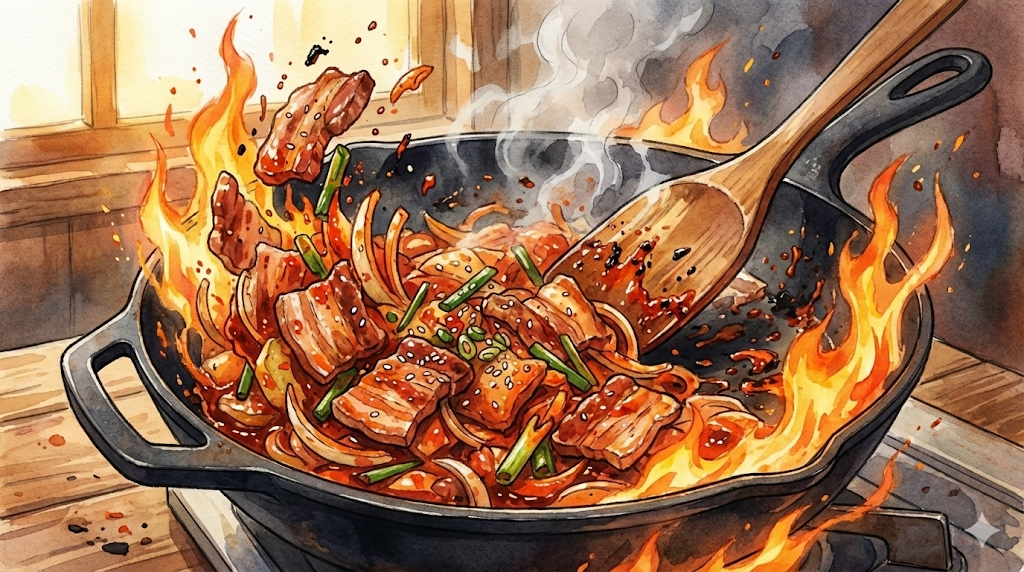
3. Jeyuk Bokkeum (Spicy Pork Stir-fry)
This is the favorite lunch menu for many Koreans.
- The Secret: Pork belly or shoulder marinated in a heavy Gochujang sauce.
- The Vibe: It is savory, spicy, and perfect when wrapped in a lettuce leaf (Ssam).
4. Dakgalbi (Spicy Stir-fried Chicken)
A popular group meal, especially in Chuncheon.
- The Dish: Diced chicken, cabbage, and sweet potatoes stir-fried on a large flat grill.
- The Finish: Furthermore, you must save some sauce at the end to make “Fried Rice” (Bokkeumbap).
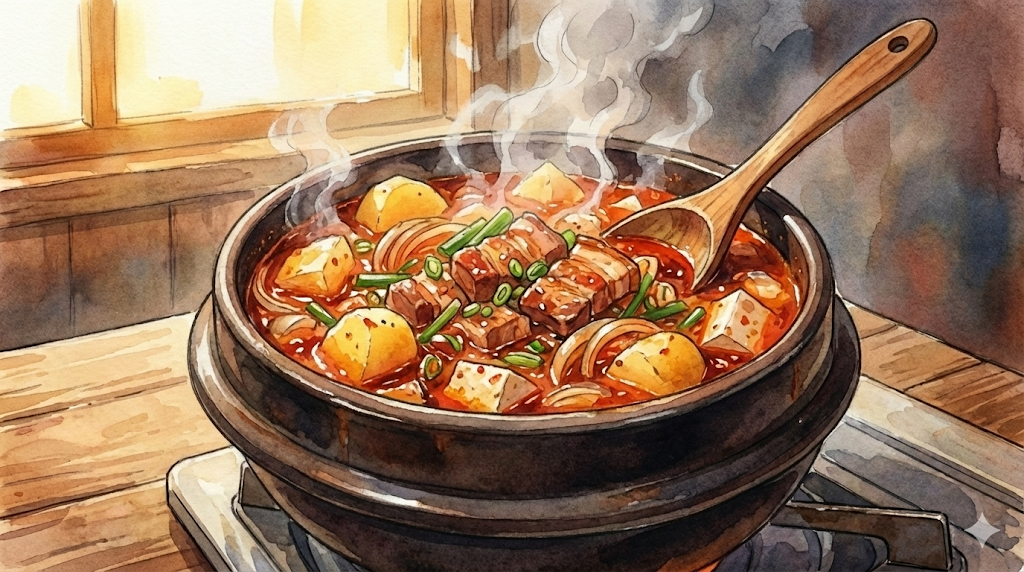
5. Gochujang Jjigae (The Deep Stew)
Unlike Kimchi Jjigae, this stew relies entirely on the paste for flavor.
- The Ingredients: Potatoes, pork, and zucchini.
- The Texture: The soup is thick, hearty, and very savory.
- Best for: Cold rainy days or a heavy dinner.
Level 3: Ssam’s Insight (The Fermentation Magic)
(Why is it so different?)
The Power of Aging
You might wonder, “How can one paste create so many flavors?” Fundamentally, it is because Gochujang is not a raw sauce. Since it is fermented for months (or years), it contains a complex profile of salty, sweet, and spicy notes.
Specifically, when you add cream, it becomes a “Rosé” sauce. On the other hand, when you add sesame oil and beef, it becomes a rich steak sauce. For this reason, these Gochujang Dishes can taste so diverse.
Level 4: Ssam’s Secret Map (Where to Taste)
Ready to try these? Here are some legendary spots.
Gwangjang Market (For Tteokbokki & Bibimbap)
- Location: [Naver Map Search for Gwangjang Market]
- Tip: Try the “Mayak Kimbap” with your Tteokbokki.
📍 Chuncheon Myeongdong Dakgalbi Street
- What: The birthplace of Dakgalbi.
- Location: [Visit Korea – Dakgalbi Street Guide]
Alice’s Bottom Line: Look Past the Red
Don’t be afraid of the color. Instead, embrace the variety. If you try all these Gochujang Dishes, you will finally understand the true “taste of Korea.”
Survival Hangul: Ordering Edition
- “제일 인기 있는 고추장 요리가 뭐예요?”
- Pronunciation: (Je-il in-gi it-neun go-chu-jang yo-ri-ga mwo-ye-yo?)
- Meaning: What is the most popular Gochujang dish?
- “덜 맵게 해주세요.”
- Pronunciation: (Deol maep-ge hae-ju-se-yo)
- Meaning: Please make it less spicy.
- “밥 볶아주세요!”
- Pronunciation: (Bap bok-ka-ju-se-yo!)
- Meaning: Please make fried rice!
Read This Next (Before You Make Another Mistake)
Love Gochujang? Learn more about it.